

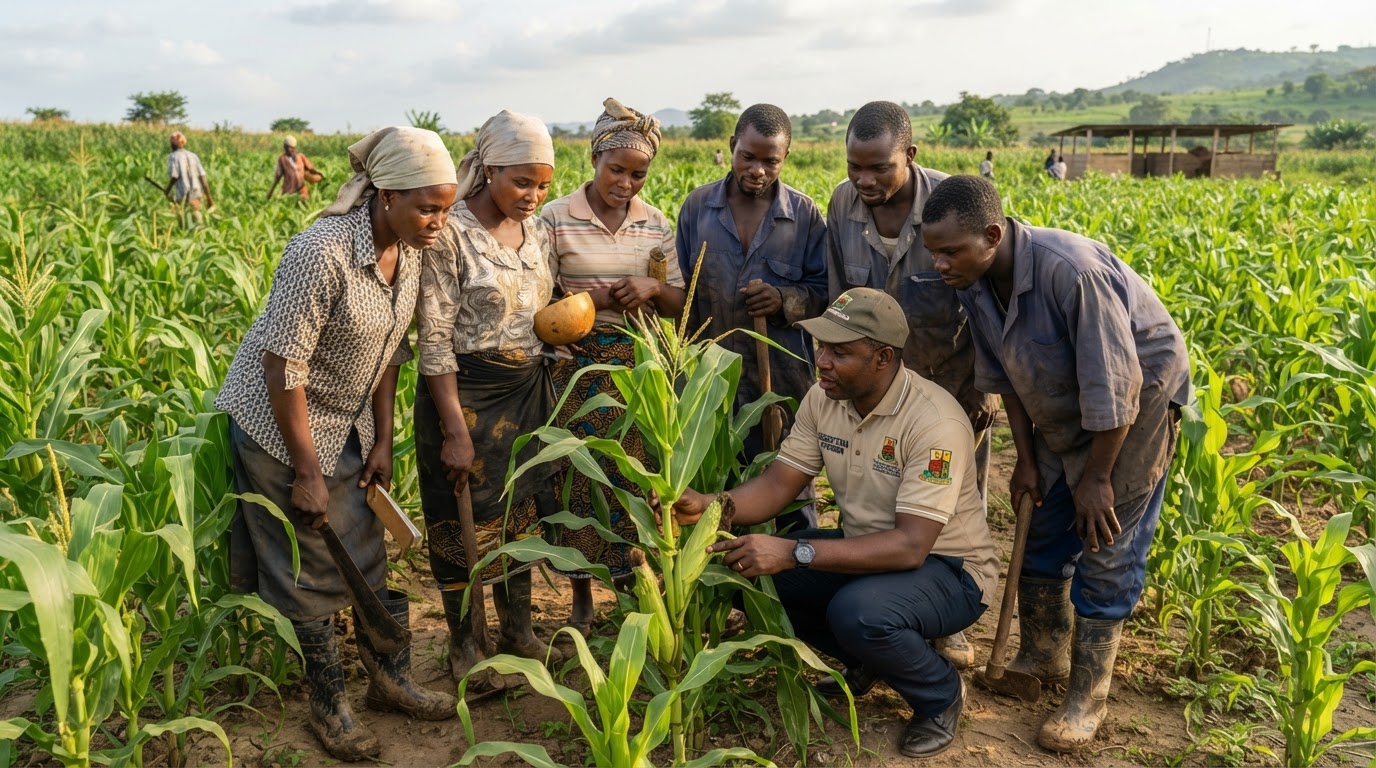
Nigeria’s agricultural productivity challenge is not only about access to land, fertiliser or machinery. It is also about whether farmers can obtain reliable advice when they need it. The 2026 Wet Season Agricultural Performance Survey identified 2,064 active agricultural extension agents nationwide, with each agent serving an average of 4,982 farm families.
The ratio exposes a major weakness in the system that connects agricultural research and public policy to everyday farm decisions. Extension officers help farmers interpret weather information, identify pests and diseases, select inputs and improve production practices. When too few officers are available, farmers may be left to rely on informal advice or discover problems only after damage has occurred.
A wide advice gap
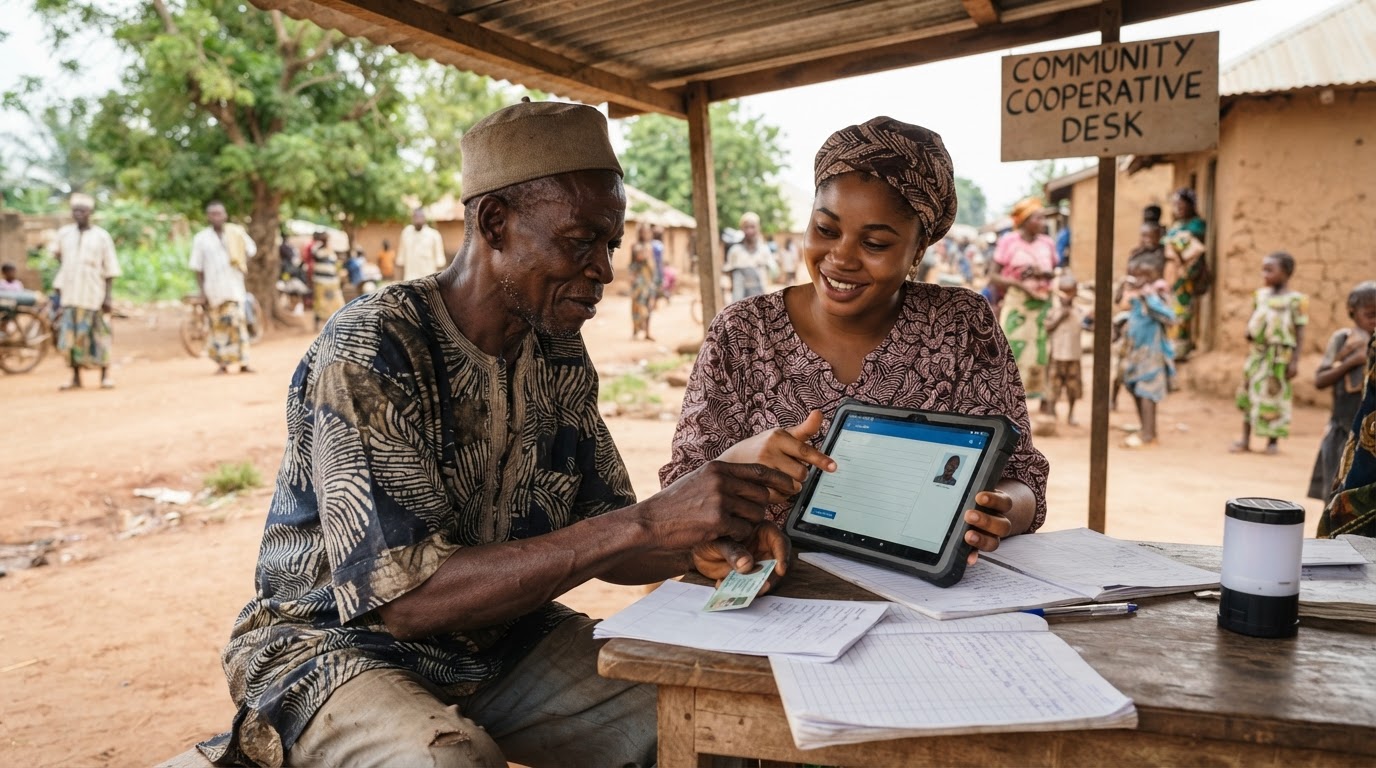
The national average hides regional differences. The survey found that coverage was thinnest in the South-South, where one active extension agent served an average of 8,858 farm families. The report also recorded flooding, dry spells and crop pest outbreaks across different states, making timely field advice especially important.

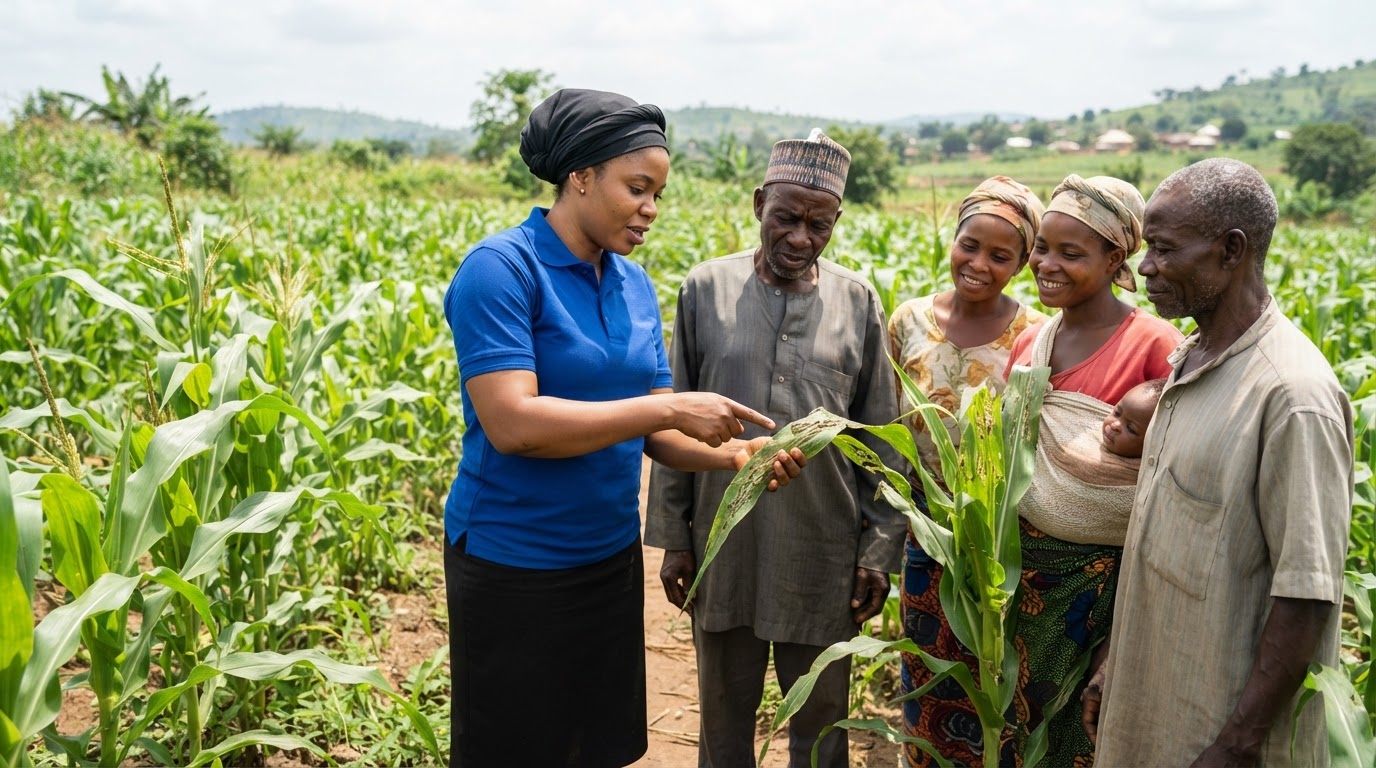
Farmers dealing with fall armyworm, Tuta absoluta, cassava mosaic disease or stem borers need more than a general agricultural message. They need help identifying the problem correctly, understanding available control options and avoiding measures that waste money or damage crops.
Training is not enough
Government and development partners often announce training programmes for extension personnel. Such initiatives matter, but the impact depends on whether trained officers are deployed, equipped and able to visit communities regularly. A trained officer who lacks transport, field materials or access to current research cannot provide consistent support.
Digital tools can help officers share alerts and reach more farmers, but they cannot fully replace field visits. Farmers may have limited connectivity, low digital literacy or difficulty interpreting technical advice delivered through a phone. Digital channels work best when they strengthen, rather than substitute for, human support.
Research must reach farmers
NAERLS recommended stronger links between researchers and field agents, alongside better access to affordable inputs, finance and machinery. This connection is essential. Research institutions may develop improved varieties or production methods, but farmers benefit only when the information reaches them in a language and format they can use.
State Agricultural Development Programmes, local governments, universities, farmer cooperatives and private input suppliers all have roles to play. A coordinated system could use demonstration plots, radio programmes, community field days and trained lead farmers to extend the reach of professional advice.
Measure results, not headcounts
Authorities should publish more than the number of extension workers recruited or trained. They should track how many farm households receive regular visits, how quickly pest alerts reach communities, whether farmers adopt recommended practices and whether yields or incomes improve. Data should also show which local government areas are underserved.
Without this information, it is difficult to know whether extension spending is solving the problem or simply adding another programme to the list. The low national coverage ratio suggests that the system requires sustained investment, not occasional training announcements.
Farmers make decisions every season that can determine whether a household earns an income or records a loss. Reliable advice is therefore a productive input, just like seed, water and fertiliser. If Nigeria wants better harvests, it must close the extension gap and make agricultural knowledge accessible where crops are actually grown.