


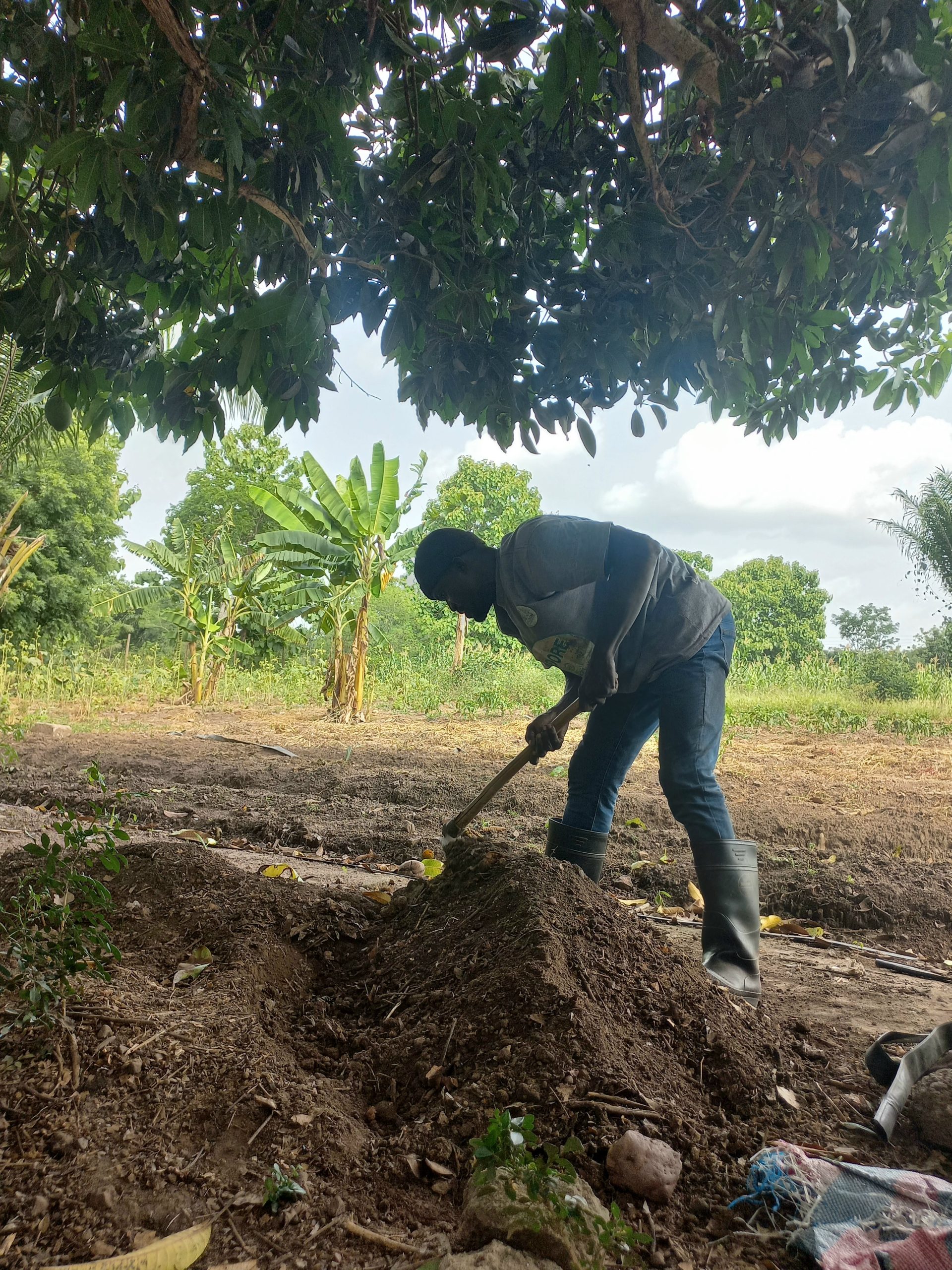
Critical Analysis | Soil Health, Agricultural Inputs and Food Production
Fertiliser is one of the most important inputs in modern agriculture, helping crops obtain nutrients needed for growth. In Nigeria, where farmers face rising production costs and pressure to increase food output, access to affordable fertiliser is a major agricultural policy concern.
Yet the debate often focuses on how much fertiliser farmers can obtain and how much government can subsidise, rather than whether the product being applied is appropriate for the soil and crop.

This raises a fundamental question: can Nigeria significantly improve agricultural productivity by making fertiliser cheaper alone, or does it need to invest more heavily in soil testing, extension services and precise nutrient management?
The answer matters because fertiliser subsidies can reduce immediate costs, but they cannot automatically correct soil deficiencies, improve farming practices or ensure that inputs are used effectively. If Nigeria wants better yields and stronger food security, it must consider not only the price of agricultural inputs but also how well those inputs work.
The Cost of Feeding the Soil
Fertiliser prices have become a major concern for Nigerian farmers, particularly those who operate on small plots and depend on seasonal income.
The 2024 Wet Season Agricultural Performance Survey, published by the National Agricultural Extension and Research Liaison Services and the Federal Ministry of Agriculture and Food Security, reported that high fertiliser prices and limited affordability contributed to low use of inorganic fertilisers during the 2024 cropping season.
The survey reported average NPK prices of approximately ₦40,000 per bag in northern states and ₦39,500 in southern states on the open market. Government-subsidised prices were reported at approximately ₦23,000 in the north and ₦24,000 in the south.
For urea, the report listed open-market prices of about ₦36,000 in northern states and ₦39,000 in southern states, compared with subsidised prices of approximately ₦20,000 in both regions.
These are figures from the 2024 survey and should not be treated as current market prices. Their value is in illustrating the substantial difference that subsidies can make to the cost farmers face.
The survey also reported that NPK was used by a much larger share of farmers than urea during the season, while noting that high input prices constrained agricultural production.
More recent concerns remain. The FAO’s September 2026 country brief on Nigeria estimated that NPK prices increased by 12 per cent and urea prices by 43 per cent between February and May 2026.
When fertiliser becomes more expensive, farmers may apply less than recommended, cultivate less land or choose cheaper products without knowing whether those products meet their crops’ needs. Such decisions can affect yields and profitability.
Making fertiliser more affordable is therefore a legitimate policy objective. The question is whether price support alone can deliver the productivity gains Nigeria needs.
More Fertiliser Is Not Always Better
Fertiliser contains nutrients that crops need, but different soils and crops require different nutrient combinations.
Nitrogen, phosphorus and potassium perform different functions in plant growth. The appropriate quantity depends on the crop, soil conditions, previous land use, rainfall and other factors. Applying too little can restrict growth, while applying nutrients that are already sufficiently available may waste money and, under some conditions, contribute to environmental problems.
This is where soil testing becomes important.
Testing can help determine nutrient deficiencies and guide decisions about which fertiliser to use, how much to apply and when to apply it. Rather than treating every farm as though it has identical needs, farmers can make decisions based on the condition of their own land.
Without reliable advice, farmers may rely on habit, recommendations from other growers or the products most readily available from dealers. Such approaches may sometimes work, but they are not a substitute for location- and crop-specific recommendations.
The policy implication is straightforward: reducing fertiliser prices and improving fertiliser use are related but different objectives. A subsidy can lower the purchase price; it cannot by itself guarantee that the farmer applies the correct nutrient at the appropriate rate.
Nigeria’s Soil Health Scheme
The Federal Government has begun developing a more data-driven approach through the Nigerian Farmers Soil Health Scheme.
The initiative includes plans for soil-testing laboratories across Nigeria’s 774 local government areas, personalised Soil Health Cards and crop-specific fertiliser recommendations. The Nigeria Soil Information System is intended to consolidate soil data to guide farm-level decisions and agricultural planning.
The scheme’s official website describes its aim as promoting location- and crop-specific soil management and more judicious fertiliser application.
This approach could help farmers understand what their land needs instead of relying on generic recommendations. It could also help government identify areas with particular nutrient deficiencies and make agricultural support more targeted.
However, an announced nationwide ambition should not be confused with complete operational coverage. Establishing a functional laboratory requires equipment, trained personnel, maintenance, quality control and reliable systems for returning results to farmers.
Testing also needs to be affordable and accessible. If samples take too long to process, recommendations arrive after planting decisions have been made, or farmers cannot obtain the inputs recommended, the service may have limited practical value.
The scheme’s success will therefore depend not only on the number of laboratories planned, but also on whether farmers can use them and apply the advice they receive.
Subsidies Versus Soil Intelligence
The debate should not be framed as a choice between subsidies and soil testing. Nigeria may need both, but the balance and design of public support matter.
Fertiliser subsidies can provide immediate relief when prices are high, particularly for farmers who would otherwise reduce input use. However, poorly targeted subsidies can be costly, difficult to administer and vulnerable to diversion or delayed delivery.
If subsidised fertiliser does not reach the intended farmers at the right time, its effect on production may be limited. If farmers receive a product that is unsuitable for their soil or crop, the public subsidy may deliver less value than expected.
Soil testing offers a different kind of intervention. Rather than directly lowering the purchase price, it aims to improve the efficiency of spending by identifying which nutrients are needed and in what quantities.
Yet soil intelligence cannot solve every constraint either. A farmer may know exactly what the soil requires but still lack the money to buy the recommended fertiliser. Testing and subsidies must therefore work together.
One possible approach is to link input support with soil-specific recommendations and agricultural extension services. This could help ensure that public assistance reduces costs while encouraging more effective use of fertiliser.
Such a system would require careful design to avoid turning soil testing into an administrative barrier that delays planting or excludes farmers who lack formal records.
The Role of Extension Services
Soil test results are useful only when farmers can understand and act on them.
Many farmers need practical guidance on nutrient application, crop rotation, organic matter, erosion control and the long-term management of soil fertility. Agricultural extension workers can translate laboratory findings into advice that reflects the realities of individual farms.
However, extension services need adequate staffing, transport, training and operational funding. A nationwide soil-testing programme will be difficult to sustain if there are insufficient personnel to explain the results or follow up with farmers.
Digital tools may help deliver recommendations, but they should complement in-person support, particularly for farmers with limited connectivity or digital literacy.
The government should also work with agricultural research institutions, universities, farmer organisations and responsible private-sector providers to ensure that recommendations are scientifically sound and regularly updated.
Protecting Soil for the Long Term
Soil fertility is not determined by fertiliser alone. Organic matter, water management, erosion, crop rotation and land-use practices also influence how productive farmland remains over time.
Excessive dependence on a narrow range of nutrient inputs may not address the full condition of degraded soils. Farmers may need combinations of mineral fertilisers, organic materials, improved crop varieties and conservation practices suited to local conditions.
Climate change makes this even more important. Heavy rainfall can wash nutrients away, while prolonged dry conditions can affect how crops absorb available nutrients. Improving soil health can contribute to resilience, but the benefits depend on appropriate management rather than a single product.
Nigeria’s soil-health strategy should therefore connect fertiliser recommendations with broader land management and climate adaptation.
Harbinger has previously examined the importance of resilient farm production in its coverage of support for Kaduna ginger farmers and affordable irrigation technology for Nigerian farmers.
What Nigeria Must Get Right
Nigeria should retain a focus on affordable agricultural inputs while improving the evidence that guides their use.
Subsidies should be transparent, timely and targeted towards farmers who need support. Soil testing should be practical, accessible and supported by trained extension workers. Government should monitor whether recommendations are reaching farmers and whether they lead to measurable improvements in yields, costs and farm incomes.
Furthermore, the soil-health scheme should be assessed by its operational performance rather than the number of laboratories promised. Relevant indicators include turnaround times for test results, the number and profile of farmers served, the proportion who act on recommendations and the productivity gains achieved.
Agricultural policy must also recognise that farmers need access to finance and reliable markets. Better soil management cannot generate sustainable gains if farmers cannot afford inputs or sell their harvests profitably.
Nigeria’s fertiliser challenge is not simply a question of how much government can subsidise. It is also a question of how intelligently the country manages soil nutrients, supports farmers and measures agricultural productivity. A more effective strategy would make necessary inputs affordable while ensuring they are applied where, when and in the quantities that crops actually require.