


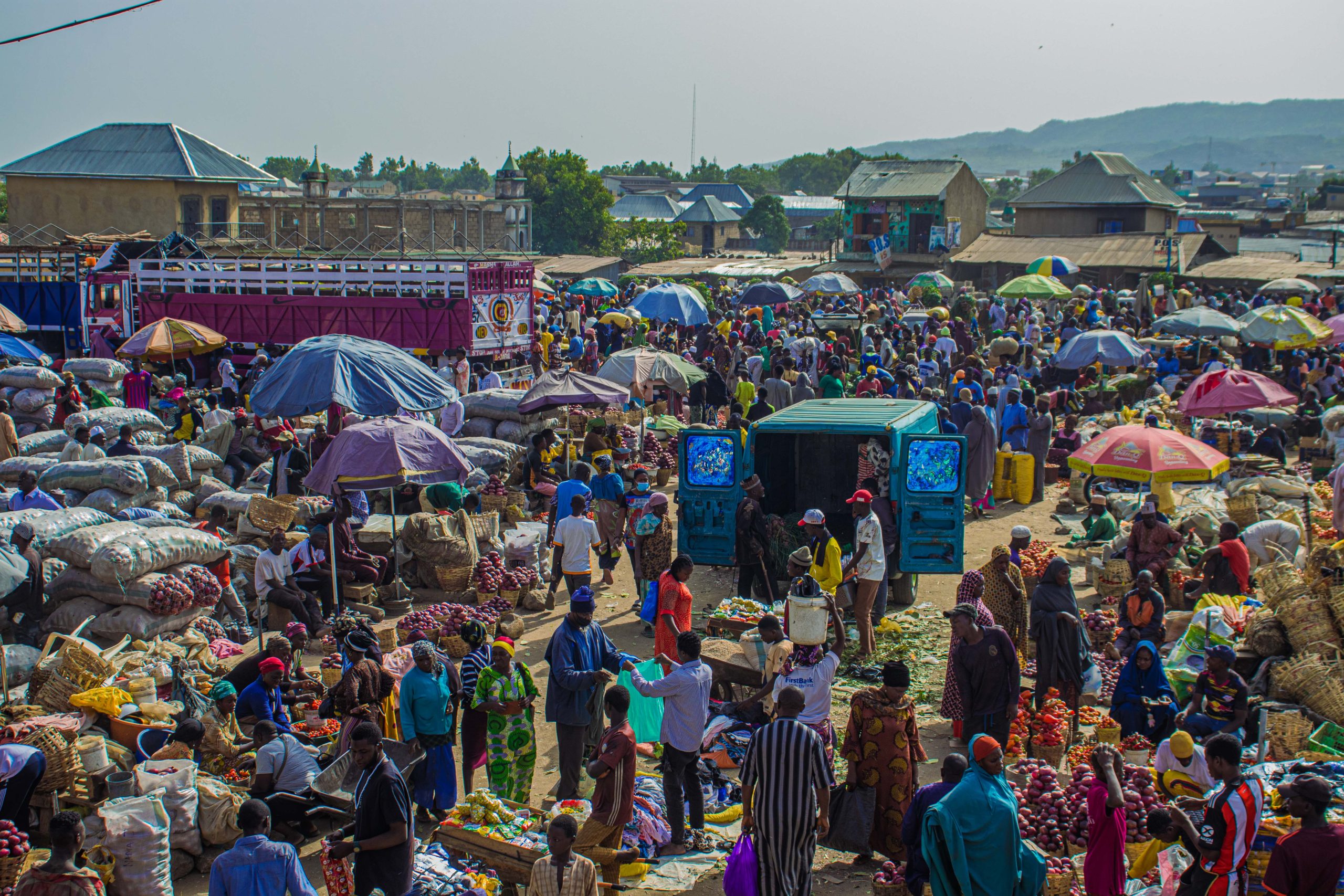
Nigeria’s food crisis presents a contradiction that policymakers have yet to resolve: a country with vast agricultural potential, millions of people engaged in farming and the capacity to produce a wide range of staple crops continues to struggle with food affordability.
The problem is not simply how much food Nigerian farmers produce. It is also how much survives after harvesting, how much it costs to transport, how efficiently it reaches markets and whether households can afford to buy it.
Recent reports reveal the depth of the challenge. Food prices have eased in some markets, yet high distribution costs and weak consumer purchasing power continue to limit relief. Meanwhile, climate shocks, insecurity and expensive farm inputs threaten production itself.

For Nigeria, the central question is no longer just how to grow more food. It is how to build a food system that delivers agricultural produce efficiently, protects farmers’ incomes and makes nutritious meals affordable.
The Food Price Paradox
Nigeria’s inflation figures offer some evidence of easing price pressures, but they do not necessarily signal an end to the food affordability crisis.
According to Premium Times’ report on the National Bureau of Statistics’ September 2026 inflation data, headline inflation declined to 14.63 per cent in September from 15.39 per cent in August. Annual food inflation stood at 19.59 per cent, compared with 20.16 per cent in September 2025. On a month-on-month basis, however, food prices fell by 1.55 per cent in September.
The distinction is important. A decline in annual inflation means prices are increasing more slowly than before; it does not mean that food has returned to its previous price levels. For households whose earnings have struggled to keep pace with earlier increases, food may remain unaffordable even as the inflation rate falls.
The problem is also uneven across the country. BusinessDay’s analysis of state-level food inflation reported annual food inflation of 34.4 per cent in Lagos in September 2026, while Taraba recorded a decline of 7.47 per cent. The NBS has cautioned that differences in household consumption patterns affect the weights used in state inflation baskets, so the figures should not be read as a direct comparison of food affordability.
The latest market evidence also complicates the picture. A PUNCH report on the third-quarter 2026 SBM Jollof Index found that the index declined by 11.5 per cent, or 8.5 per cent after adjustment. Yet the report warned that falling market prices had not translated into meaningful improvements in household food security.
In northern markets, increased supplies helped push prices down. In Lagos and Abuja, however, some traders reduced prices because consumers could no longer afford to buy at previous levels.
This is the distinction policymakers must understand: food prices can fall because supply improves, or because consumers have run out of purchasing power. Both may produce lower market prices, but only the former necessarily signals a healthier food supply.
The Cost of Moving Food
One of the most persistent weaknesses in Nigeria’s food system is the expense of transporting produce from farming communities to consumption centres.
Farmers may harvest substantial quantities of maize, rice, tomatoes, onions and other crops, but those products must still pass through a distribution network involving vehicles, fuel, handling, storage and market charges. Each stage can increase the price paid by consumers.
The October 28 PUNCH report on the SBM Jollof Index described traders facing high fuel costs and additional expenses along distribution routes. Traders in Ibadan quoted fuel prices of between ₦1,380 and ₦1,400, while respondents in Calabar reported transport-cost increases of between five and 15 per cent.
The survey also documented complaints about unofficial charges at checkpoints. Kano traders, for example, reported payments of between ₦500 and ₦1,000 at individual police and vigilante stops along a route between farm gates and the market.
These are reported experiences from the survey, rather than a comprehensive measurement of every transport route. Nevertheless, they illustrate how additional costs can accumulate before food reaches the consumer.
Perishable products face an added disadvantage. Tomatoes, peppers, leafy vegetables, fish and poultry can deteriorate during long journeys, particularly when transport is delayed or temperature-controlled storage is unavailable. Traders who lose part of a shipment may attempt to recover their costs by raising prices on the produce that remains.
Farmers can also lose out. If transportation is too expensive, buyers may offer lower prices at the farm gate, reducing growers’ earnings even when retail prices remain high.
Improving rural roads, strengthening links between producing areas and urban markets, and addressing unlawful charges could help reduce these costs. However, transport infrastructure must work alongside better market coordination, reliable security and efficient distribution systems.
Otherwise, increased agricultural production may continue to generate less benefit for farmers and consumers than it should.
Where the Harvest Goes to Waste
Nigeria’s food-security debate often concentrates on increasing agricultural production. Yet food that has already been grown can be lost before it reaches consumers.
A Guardian investigation published in July 2026 reported an estimate of approximately 38 million tonnes of agricultural produce lost annually, highlighting inadequate handling, packaging, storage and transportation.
Separately, the Organisation for Technology Advancement of Cold Chain in West Africa estimated that Nigeria lost between 30 million and 40 million metric tonnes of food across major value chains in 2025, with the economic cost estimated at between ₦3.5 trillion and ₦5 trillion. Those figures were reported by African Press Agency in February 2026.
The figures come from different reports and should not be treated as a single, independently verified national measurement. However, both highlight the potential scale of Nigeria’s post-harvest challenge.
The consequences extend beyond wasted food. Every lost tonne represents resources that have already been committed to production, including land, labour, seeds, water, fertiliser and energy. Farmers lose potential income, traders face greater uncertainty, and consumers lose access to food that could otherwise have reached the market.
Smallholder farmers are particularly vulnerable when they lack suitable warehouses, drying facilities, processing equipment or reliable access to electricity. Without affordable storage, they may have little choice but to sell quickly after harvesting, even when prices are unfavourable.
The result is a costly contradiction: Nigeria can invest in producing more food while simultaneously losing significant quantities of what it has already grown.
Reducing these losses should therefore be treated as an agricultural priority in its own right, not merely as an additional benefit of infrastructure development.
Can Food Hubs Make a Difference?
Investment in cold storage, grain warehouses, processing facilities and organised food distribution could help address post-harvest losses. But the success of such projects will depend on whether they deliver practical benefits to farmers, traders and consumers.
On October 28, 2026, Vanguard reported that construction of Lagos State’s 500-hectare food logistics hub had reached 70 per cent completion. Governor Babajide Sanwo-Olu said the first phase was expected to be commissioned before the end of December.
The planned development includes cold-chain and dry-chain facilities intended to improve storage, processing and food distribution. The state also plans to connect the hub with markets and agricultural supply routes serving Lagos, drawing produce from states including Nasarawa, Taraba, Kogi and Kwara. Harbinger has also reported on the project’s progress and its proposed role in reducing produce waste.
The initiative reflects a broader economic reality: feeding a major urban population depends not only on what is produced nearby, but also on how efficiently food moves from producing regions to consumers.
However, construction progress should not be confused with demonstrated food-security gains. The real test will be whether the facilities become operational, remain reliable and offer services at prices small-scale producers and traders can afford.
Cold rooms require dependable power, maintenance and competent management. Warehouses need effective pest control and suitable storage conditions. Processing facilities must have access to raw materials and viable markets for their products.
If fees are too high, smallholder farmers may be excluded. If facilities are poorly located or disconnected from transport networks, their capacity may not translate into substantial reductions in losses.
Government should therefore measure such projects against clear outcomes: the quantity of produce preserved, the number of farmers and traders served, the reduction in post-harvest losses and the extent to which efficiency gains benefit consumers.
The objective should not simply be to build larger facilities. It should be to create a food-distribution system that works better and costs less.
Farmers Under Pressure
Nigeria’s food crisis cannot be explained entirely by logistics. Production itself is under pressure from climate shocks, insecurity and the rising cost of agricultural inputs.
A World Bank analysis published on July 22, 2026 found that partial crop losses affected more than one in five surveyed plots in the 2023/24 agricultural season, compared with roughly one in 17 in 2018/19.
Using Nigeria’s General Household Survey–Panel data, the analysis identified weather and environmental shocks, including flooding and excessive rainfall, as major contributors to crop losses. Conflict-related factors had also become more prominent.
Insecurity can prevent farmers from reaching their land, obtaining inputs, harvesting crops or transporting produce safely. It can also disrupt agricultural labour and market access, forcing some farming households to reduce cultivation or abandon fields altogether.
Climate variability compounds these problems. Flooding can destroy crops and damage roads, while prolonged dry spells can reduce yields and undermine farmers’ investments in seeds and fertiliser. Harbinger has examined the financing gap facing Nigerian farmers as they try to adapt to climate risks.
The Food and Agriculture Organisation’s September 2026 country brief on Nigeria highlighted uncertain cereal production prospects and the effects of insecurity and high input costs. It reported that fertiliser prices rose between February and May 2026, with NPK increasing by an estimated 12 per cent and urea by 43 per cent.
Higher input costs can force farmers to reduce fertiliser application, cultivate less land or accept lower returns. Any resulting decline in production can place further pressure on food supplies and household budgets.
Agricultural policy must therefore go beyond distributing farm inputs. Farmers need security, appropriate seeds, irrigation, reliable extension services, climate information and accessible markets where their produce can earn a sustainable return.
When Food Is Available but Unaffordable
Food security is not achieved simply because food is available in markets. Households must also have the means to obtain adequate and nutritious meals consistently.
The FAO’s September 2026 country brief cited a Cadre Harmonisé assessment estimating that nearly 36.3 million people faced acute food insecurity at Crisis level or worse during the June–August 2026 lean season. This included approximately 2.1 million people in the Emergency category and about 10,300 in Catastrophe conditions.
The figures refer to a defined assessment period and classification of acute food insecurity; they should not be interpreted as a count of everyone experiencing any form of hunger throughout the year. Nevertheless, they highlight the severity of the challenge, particularly in conflict-affected areas.
When food costs consume an increasing share of household income, families may reduce portion sizes, buy less nutritious alternatives or cut spending on other essentials. Lower market prices offer limited relief if earnings remain insufficient to cover basic needs.
Farmers can also experience food insecurity despite producing crops. Poor farm-gate prices, post-harvest losses and the cost of preparing for another planting season can leave growers with inadequate income even after a successful harvest. Harbinger has explored a related problem in its analysis of why Nigerian farmers can produce more and still remain poor.
This makes food affordability inseparable from agricultural productivity. Farmers need profitable markets, while consumers need sufficient purchasing power to buy what those farmers produce.
Government assessments should therefore look beyond aggregate food output and inflation. Household income, dietary quality, access to nutritious food and the distribution of price changes across regions all matter when determining whether food security is genuinely improving.
The Agritech Opportunity
Agricultural technology could help Nigeria address weaknesses in production and distribution, but its effectiveness depends on whether it solves problems farmers actually face.
Digital platforms can connect producers with buyers and provide price information. Satellite monitoring and weather services can help farmers anticipate risks, while soil testing can support more precise fertiliser application. Improved storage monitoring, processing equipment and cold-chain tracking can also reduce waste.
However, technology is not automatically accessible. Smallholder farmers may lack reliable internet, affordable equipment, digital skills or financing. A sophisticated platform offers limited value if farmers cannot use it or if it fails to connect them with buyers willing to pay viable prices.
Successful agritech adoption requires practical training, affordable services, reliable infrastructure and support that reflects local farming conditions. Digital tools should complement agricultural extension services rather than become a substitute for the human expertise farmers need. Harbinger has previously examined how digital agriculture could widen the gap between connected and underserved farmers.
Technology must also be evaluated against measurable outcomes. Does it improve yields? Does it reduce losses? Does it lower costs or increase farmers’ earnings? Does it help consumers access food at more affordable prices?
These questions matter because Nigeria’s food challenge is structural. Digital innovation can improve efficiency, but it cannot independently resolve insecurity, poor roads, expensive financing or weak purchasing power.
The greatest opportunity lies in integrating technology with improvements across the entire food value chain.
What Government Must Get Right
Nigeria needs a food-security strategy that links production with preservation, transportation, processing and household affordability.
Investment in post-harvest infrastructure should focus on commodities and locations where losses are greatest. Storage and processing projects must be affordable, properly maintained and accessible to small-scale producers.
Moreover, the cost of transporting food requires sustained attention. Better rural roads, more efficient distribution routes, improved security and action against unlawful charges could help ensure that lower farm-gate prices translate into meaningful savings for consumers.
Farmers also need stronger protection against production risks. Access to quality seeds, appropriate fertiliser, irrigation, climate information and agricultural extension services can improve resilience, while security interventions must allow farmers to reach their land and markets safely.
Public programmes should be assessed through verifiable results rather than announcements alone. Funding commitments, hectares allocated and facilities constructed are indicators of activity, but they do not prove that more food has reached consumers or become affordable.
Finally, food-security policy must recognise the importance of household purchasing power. Lower inflation is encouraging, but meaningful progress requires families to be able to afford adequate and nutritious meals without sacrificing other basic needs.
Nigeria’s agricultural potential is substantial, yet that potential cannot deliver food security if crops are lost before reaching markets, distribution costs remain high, production is disrupted and consumers cannot afford the food available to them. The measure of success must extend beyond what leaves the farm to what reaches the table—and whether farmers and households alike can sustain themselves from the food economy.