


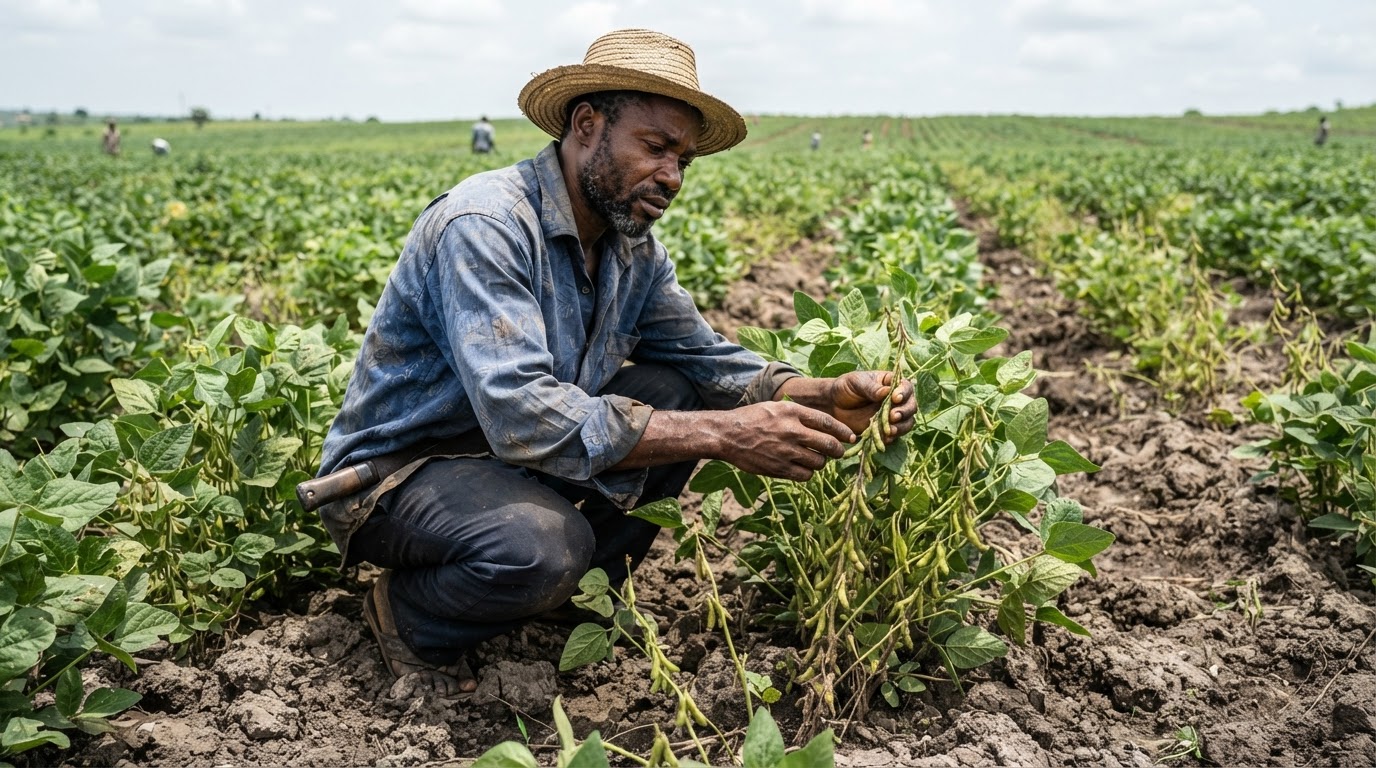
Nigeria’s projected decline in soybean production offers a warning about a common assumption in agricultural planning: putting more land under cultivation does not necessarily produce more food. The 2026 Wet Season Agricultural Performance Survey projects soybean output at about 956,745 tonnes, a decline of 2.65 per cent, even though the area cultivated increased by 3.5 per cent.
The figures point to a productivity problem. Farmers planted more, but the additional land did not translate into a larger harvest. According to the survey findings reported by the Guardian, poor seed quality and inadequate fertiliser application contributed to the decline.
More land, weaker returns
The soybean experience is important because the crop has uses beyond household food consumption. It supplies processors, animal-feed producers and other industries that depend on reliable raw materials. A decline in domestic output can put pressure on local supply chains, increase competition for available produce and weaken the income prospects of farmers who have invested in the crop.

The survey suggests that some farmers shifted towards soybean because fertiliser costs were high and prices for cereals, particularly maize and rice, were unattractive. But the shift in crop choice was not matched by adequate agronomic support. Some growers reportedly assumed that legumes did not require fertiliser, leaving crops short of nutrients needed for healthy development.
The seed and soil problem
Good seed is not simply a question of planting more. Farmers need varieties suited to their agro-ecological conditions, reliable sources and confidence that the seed being sold is genuine and viable. Poor-quality seed can reduce germination, weaken crop establishment and make the cost of land preparation, labour and other inputs less worthwhile.
Soil nutrition matters too. The survey highlighted the need for nutrients such as single super phosphate (SSP) for soybean. The lesson is not that every farmer should apply the same fertiliser formula, but that recommendations should be based on crop needs and local soil conditions. Input subsidies or cheaper fertiliser cannot deliver the best results if farmers do not know what to apply, when to apply it and in what quantity.
Extension must reach the field
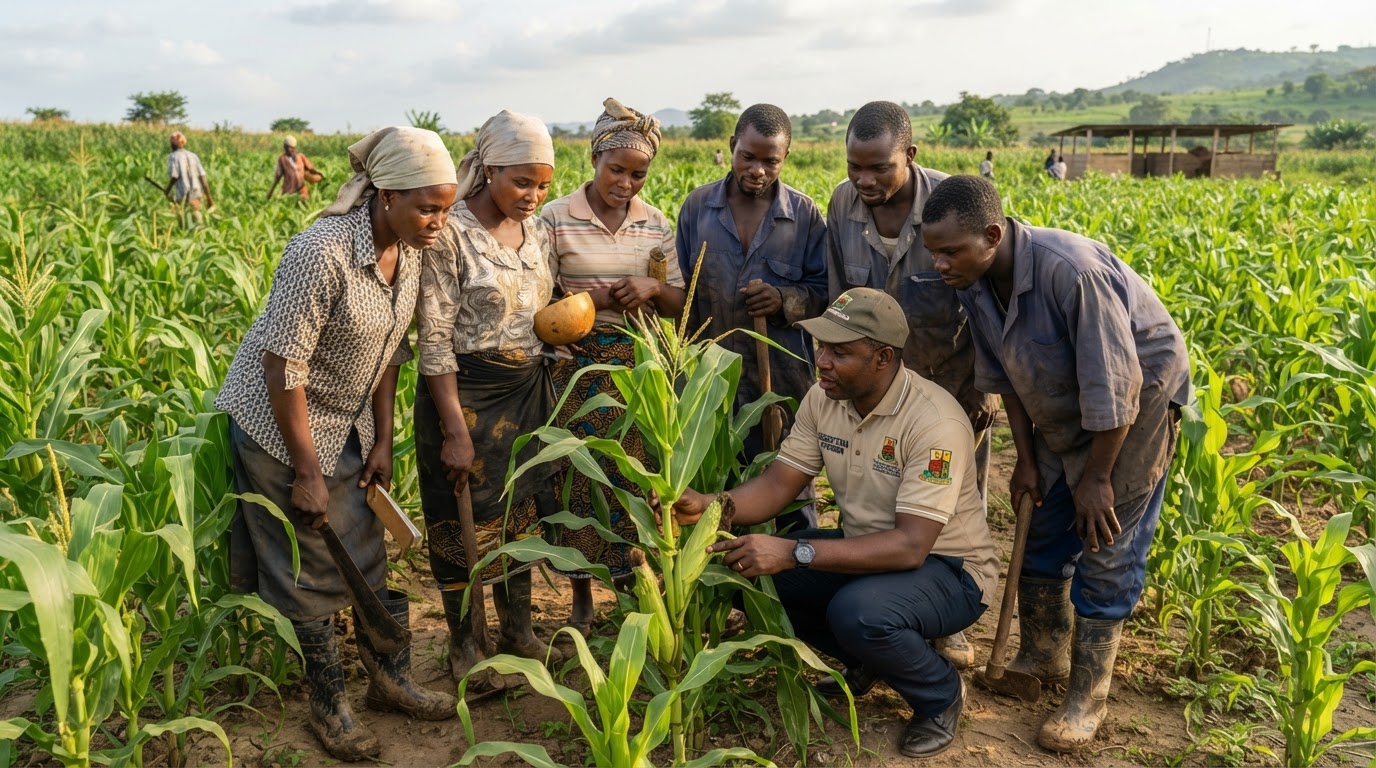
The survey’s wider findings show that Nigeria has only 2,064 active agricultural extension agents, with each serving an average of 4,982 farm families. In some regions, the ratio is considerably worse. This makes it difficult to provide the timely, crop-specific guidance farmers need, especially when they are switching crops in response to prices or input costs.
For soybean farmers, advice should cover seed selection, inoculation where appropriate, nutrient management, planting density, weed control and harvesting. A general message that legumes improve soil fertility is not a substitute for practical guidance on how to produce a marketable crop.
Build a reliable value chain
Farmers also need a clearer market signal. If prices are volatile or buyers are difficult to find, producers may move into or out of soybean without enough information about demand. Processors, aggregators and farmer groups can help by communicating quality requirements and offering more predictable purchasing arrangements.
Public programmes should therefore be judged by their effect on yield and farmer income, not simply the number of hectares covered or bags of inputs distributed. A useful response would combine certified seed access, soil testing, crop-specific extension, affordable inputs and dependable routes to market.
Nigeria’s soybean decline is not proof that farmers are unwilling to produce. It shows that expanding cultivation without addressing the conditions that determine yield can leave the country with more farmland in use but less output than expected. The priority now is to make each hectare more productive and ensure farmers have the knowledge and market incentives to keep producing.
Source: NAERLS crop performance findings reported by The Guardian.