


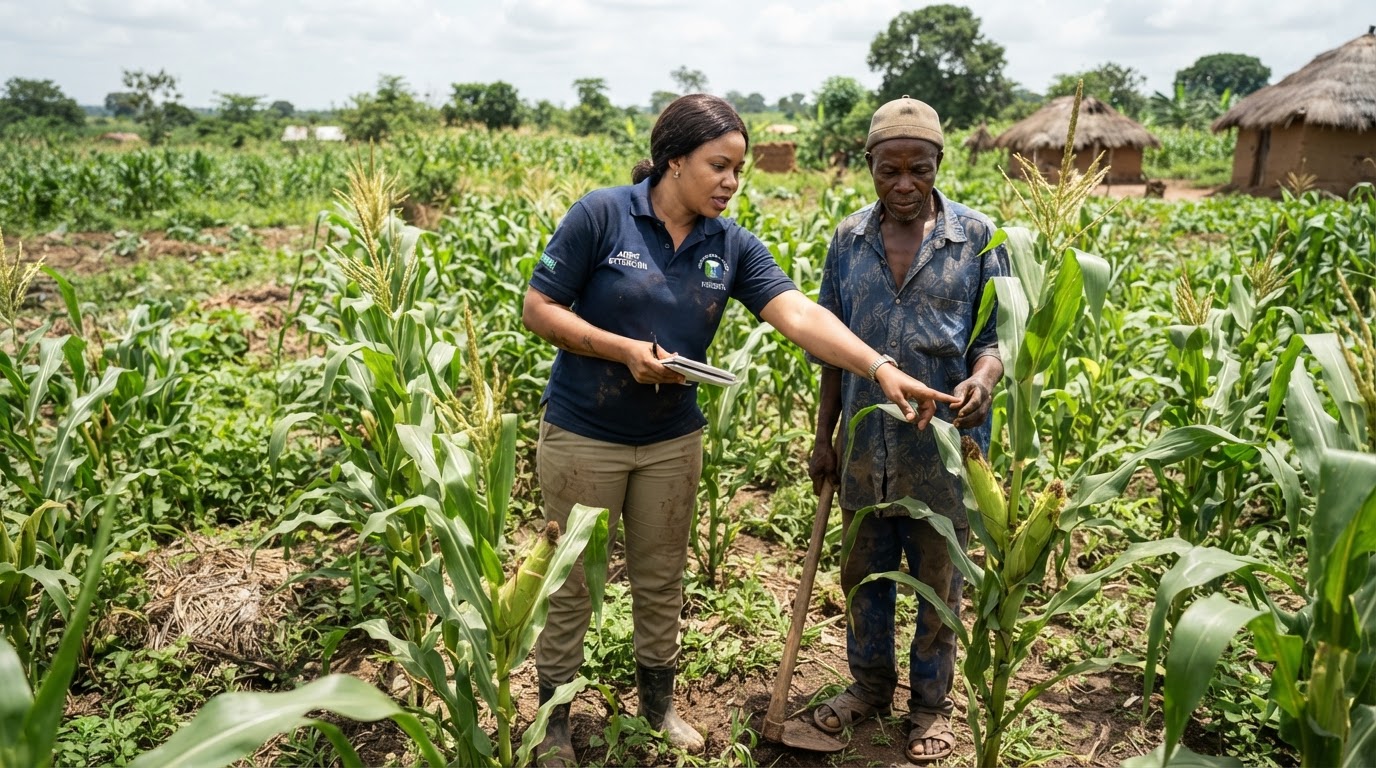
Training 1,884 agricultural extension agents and food security specialists is a significant step in a sector where farmers often struggle to access timely advice. But the announcement also highlights a difficult question: can a new digital extension initiative close the gap between agricultural research, government programmes and the day-to-day decisions farmers make in their fields?
The National Agricultural Development Fund recently launched the Grassroots Digital Extension Corps, comprising 1,110 extension agents and 774 food security specialists trained across the 36 states and the Federal Capital Territory. The programme is intended to improve farmers’ access to technical information and practical support, using personnel, digital tools and field data.
The advice gap
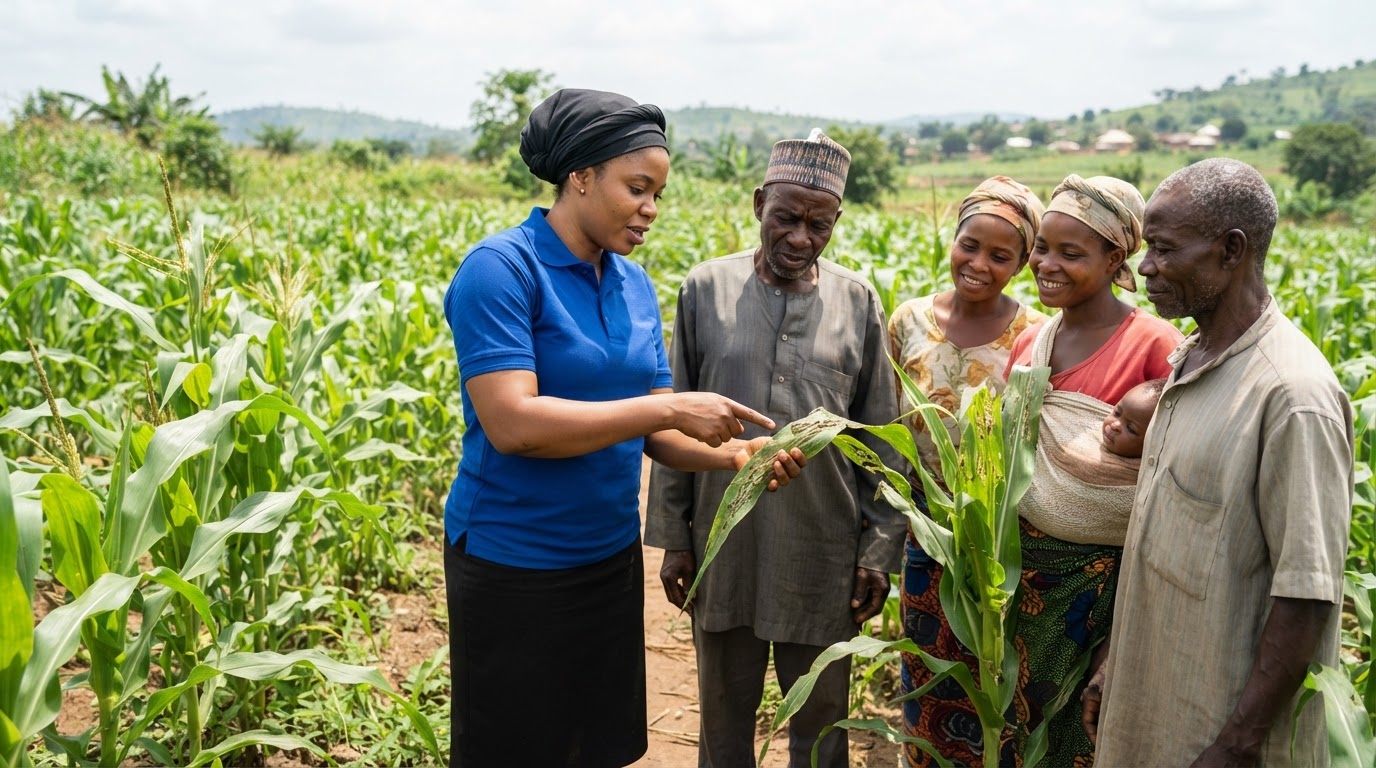
Farmers make decisions every season about seed varieties, planting dates, fertiliser application, pests, water, soil management and post-harvest handling. Getting those decisions right can influence yields, costs and the quality of produce sold. Yet information is not always easy to obtain, particularly for producers far from research centres, agricultural offices or reliable internet services.

Extension agents are meant to bridge that gap. They translate research into practical guidance, identify local problems, help farmers use inputs correctly and relay information from farms back to institutions. Where the service is thinly staffed, a farmer may receive advice only after a problem has spread or may never have direct contact with a trained adviser.
The scale of the challenge is reflected in the figures cited by the fund. The programme launch reported an extension-agent-to-farmer ratio of around one to 10,000, compared with a benchmark of one to 1,000. Ratios can vary depending on the definition of a farmer and the area counted, but they point to the difficulty of providing personalised support at scale.
Digital reach
Phones, messaging platforms, voice services and digital advisory systems can help extension personnel reach more farmers without travelling to every farm. They can distribute weather updates, pest alerts, planting guidance and information about market opportunities. Digital records may also help agents identify which communities need support and follow up on earlier advice.
That is the attraction of the new initiative. Digital tools can support agents and make their work more organised, especially when information is delivered in local languages and farmers can respond with questions or photographs of problems.
However, technology cannot remove all the barriers to communication. Some farmers may share phones, have limited connectivity, lack literacy or prefer face-to-face explanations. Advice that requires expensive inputs may be difficult to apply even when a farmer understands it. A digital programme that measures messages delivered rather than problems solved risks overstating its impact.
Training is a start
Training personnel is a useful milestone, but it does not show how many farmers they will reach, how often visits or consultations will happen, or whether agents have the tools and transport needed to work. Extension staff need supervision, resources, technical updates and a clear workload that makes field support realistic.
The fund has also called for coordination with existing agricultural advisory platforms. This is important because Nigeria has several programmes and services offering agricultural information. If systems operate separately, farmers may receive inconsistent advice, agencies may duplicate costs and data may not be shared effectively. A coordinated approach should establish common standards and clarify which service is responsible for particular areas or tasks.
What farmers need
For a farmer, success should mean practical assistance that arrives at the right time: advice on identifying pests before damage becomes severe, guidance on fertiliser use, support with planting decisions, information about climate risks and help connecting to markets. The programme should also make it easier to ask questions and receive follow-up rather than simply broadcast messages.
Women, young farmers, people with disabilities and producers in remote communities should be included in the programme’s design and evaluation. Access should not be measured only by the number of smartphones reached or the number of registrations completed.
Measure outcomes
The initiative should publish measurable indicators such as the number of farmers reached, repeat consultations, response times, adoption of recommended practices, crop-loss reductions and changes in yield or net income where these can be reliably measured. Results should be disaggregated by location and farmer group to show whether support is reaching those who are often missed.
Nigeria’s extension corps could strengthen the agricultural knowledge system if it combines trained personnel with digital tools, local language support and field-based accountability. The ultimate test is not how many people complete training, but whether farmers receive better guidance, make more informed decisions and see a practical difference in the performance of their farms.