


By Boluwatife Adedokun
For nearly five decades, successive Nigerian governments have promised farmers one thing: cheaper fertiliser.
Subsidies have been introduced, withdrawn, reintroduced, redesigned, digitised, decentralised and repackaged under different administrations.

Billions of naira have been spent. Programmes have come and gone. Policies have changed. Distribution systems have been overhauled.
Yet, one question remains unanswered.
Why are farmers still struggling to buy fertiliser?
The contradiction is difficult to ignore.
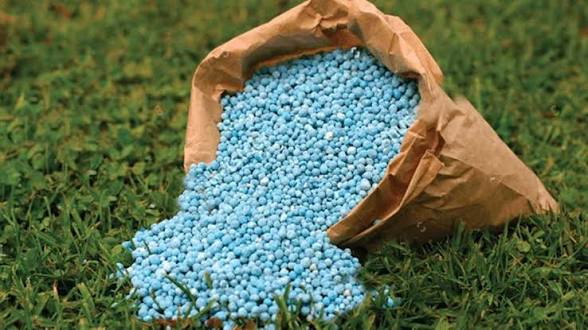
Fertiliser is one of the most important agricultural inputs in crop production. It improves soil fertility, increases yields and helps farmers maximise limited farmland. Numerous studies have established a direct relationship between fertiliser use and agricultural productivity. Increased fertiliser consumption is associated with higher crop yields and stronger agricultural output.
Despite this, fertiliser remains out of reach for many Nigerian farmers, particularly smallholders who produce most of the country’s food.
The problem is not that Nigeria has ignored fertiliser.
The problem is that Nigeria’s fertiliser policies have repeatedly failed to answer a more important question: how can fertiliser reach farmers at the right price, in the right quantity and at the right time?
Nigeria’s long and complicated relationship with fertiliser subsidies
Nigeria’s fertiliser subsidy programme dates back to 1976.
The original idea was simple. The government would absorb part of the cost of fertiliser, making it affordable for farmers.
Over the years, the programme evolved into different models, but the central objective remained unchanged: increase agricultural productivity, reduce poverty and strengthen food security.
The 1980s brought major policy shifts.
The introduction of economic reforms and structural adjustment policies led to a gradual reduction in government intervention. Fertiliser subsidies were reduced, prices increased and procurement was increasingly commercialised. By 1989, fertiliser prices had risen significantly. The subsidy programme was later reintroduced in 1997 after concerns over declining access among farmers.
Then came another major intervention.
The Federal Market Stabilisation Programme (FMSP), implemented between 1999 and 2011, became one of the country’s largest fertiliser subsidy initiatives.
Between 2008 and 2010 alone, Nigeria spent almost 150 million dollars annually on fertiliser subsidies, making it one of the biggest spenders on agricultural input subsidies in sub-Saharan Africa.
However, increased spending did not automatically translate into improved access.
The middlemen problem
One of the biggest criticisms of Nigeria’s fertiliser subsidy system has always been distribution.
For decades, fertiliser passed through a complicated network involving federal agencies, state governments, local governments, contractors, political actors and distributors before finally reaching farmers.
At every stage, leakages occurred.
Researchers have repeatedly identified non-transparent distribution systems as one of the biggest weaknesses of the subsidy programme. Fertiliser intended for farmers often failed to reach them because it was diverted, hoarded or captured by politically connected individuals.
In some cases, farmers reported receiving fertiliser after planting seasons had already passed.
Subsidised fertiliser that should have reduced production costs became a commodity controlled by middlemen.
As a result, farmers were forced to purchase fertiliser from commercial markets at significantly higher prices.
The irony was striking.
The government was paying subsidies, yet many farmers continued paying market prices.
When politics entered the fertiliser market
Agricultural subsidies are rarely separated from politics.
Evidence from Nigeria suggests that political influence has played a role in determining who benefits from fertiliser programmes.
A study published in the journal Food Policy found that communities with stronger political connections often received greater access to subsidised fertiliser than less influential communities. The study concluded that political considerations influenced subsidy allocation.
This raises uncomfortable questions.
Who benefits from agricultural subsidies?
Smallholder farmers?
Large commercial farmers?
Political actors?
Contractors?
The answers are not always straightforward.
What is clear, however, is that unequal distribution weakens the purpose of any subsidy programme.
The digital revolution that promised to change everything
In 2011, Nigeria launched the Agricultural Transformation Agenda.
One of its most celebrated reforms was the Growth Enhancement Support Scheme (GESS).
The programme introduced electronic vouchers.
Instead of distributing fertiliser through traditional government channels, farmers would register electronically and receive vouchers through their mobile phones. They could then redeem subsidised inputs directly from authorised agro-dealers.
The reform was widely praised.
For the first time, technology was being used to reduce corruption and bypass middlemen.
But implementation challenges soon emerged.
Many rural farmers lacked access to mobile phones.
Some struggled with digital registration.
Network problems affected voucher delivery.
Questions also emerged about database accuracy and beneficiary verification.
Although the programme represented an important shift, it failed to eliminate all the structural weaknesses that had plagued previous subsidy systems.
Nigeria produces fertiliser. So why is access still limited?
Perhaps the biggest paradox is that Nigeria is one of the leading fertiliser producers in sub-Saharan Africa.
Yet fertiliser application rates remain extremely low.
According to research by the International Food Policy Research Institute, fertiliser application in Nigeria remains below 20 per cent of application rates commonly found in developed countries.
Several factors explain this contradiction.
Poor road networks increase transportation costs.
Limited access to agricultural credit reduces farmers’ purchasing power.
Weak extension services limit farmers’ knowledge.
Security challenges disrupt distribution.
Poor quality control affects confidence in products.
And rising prices continue to place fertiliser beyond the reach of many farmers.
Subsidies alone cannot solve these structural problems.
The price farmers pay for policy inconsistency
Perhaps the greatest weakness in Nigeria’s fertiliser policy is inconsistency.
Policies have changed repeatedly.
Programmes have been introduced and abandoned.
Responsibilities have shifted between governments and private actors.
Researchers have warned that these frequent policy reversals have disrupted supply chains, increased distribution costs and reduced efficiency.
The consequences are visible across the agricultural sector.
Low fertiliser use contributes to lower yields.
Lower yields reduce food supplies.
Reduced supplies contribute to higher food prices.
Higher food prices increase food insecurity.
The entire cycle begins again.
Beyond subsidies: what should happen next?
Experts have proposed several reforms.
The first is reducing direct government involvement in procurement and distribution while strengthening private-sector participation. This approach would allow the government to focus on regulation, quality control and infrastructure rather than acting as both supplier and distributor.
The second is expanding access to agricultural credit.
A subsidy is meaningless if farmers cannot afford to pay their share of the cost.
The third is improving rural infrastructure.
Better roads would reduce transportation costs and improve distribution.
The fourth is strengthening extension services.
Access to fertiliser is important, but farmers also need information about proper application methods.
Finally, policies must be consistent.
Agricultural reforms require long-term planning.
Frequent policy reversals undermine investments and weaken confidence.
The question Nigeria must answer
The debate about fertiliser subsidies should no longer focus on how much money the government spends.
That conversation has lasted for almost 50 years.
The more important question is this:
Can farmers actually buy fertiliser when they need it?
Until the answer becomes “yes,” subsidies will remain little more than political promises written into policy documents.
And smallholder farmers, the people responsible for feeding millions of Nigerians, will continue paying the price.