


Critical Analysis | Climate Change, Agricultural Finance and Rural Livelihoods
For Nigerian farmers, climate change is no longer an abstract environmental debate. It is an economic risk that can determine whether a season produces a profitable harvest, a partial loss or a complete failure.
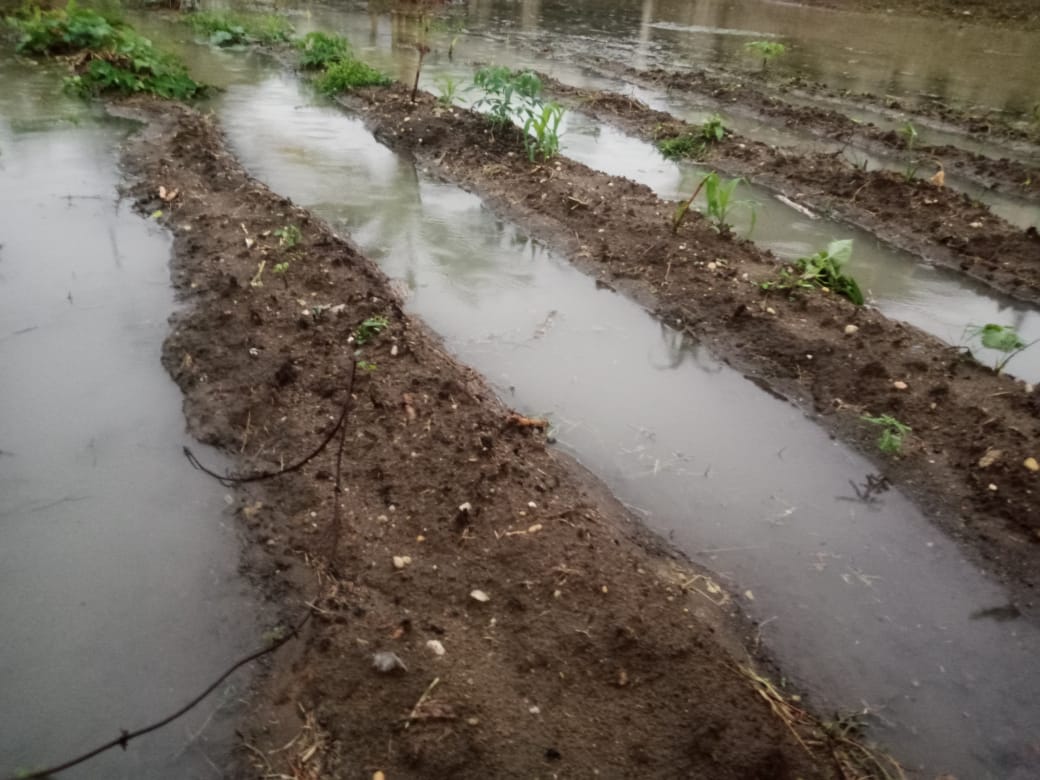
Flooding can destroy crops, wash away soil and damage rural roads. Dry spells can reduce yields, while unpredictable rainfall makes planting decisions more difficult. These shocks can leave farmers with outstanding debts, fewer resources for the next season and less produce to sell.

The effects extend beyond farms. When agricultural production is disrupted, food supplies can tighten, traders face greater uncertainty and consumers may pay more for essential staples.
Nigeria has begun exploring climate-finance frameworks intended to help smallholder farmers adapt. But an important question remains: will the money reach farmers in time to protect their livelihoods, or will climate finance remain a policy ambition that is difficult for rural communities to access?
The Cost of Climate Risk
Nigeria’s agricultural sector is highly exposed to weather conditions because many farmers depend on rainfall and have limited access to irrigation, insurance and other risk-management tools.
The scale of the problem is reflected in a World Bank analysis published on July 22, 2026. Using Nigeria’s General Household Survey–Panel data, the analysis found that partial crop losses affected more than 20 per cent of surveyed plots in the 2023/24 agricultural season, compared with roughly six per cent in 2018/19.
The study examined losses affecting field and seasonal crops such as maize, yam and cowpea, as well as permanent crops including cocoa and palm oil.
Weather and environmental shocks, including flooding and excessive rainfall, remained the largest contributor to crop losses. They accounted for more than one-third of total losses in both seasons and nearly two-thirds of partial crop losses in 2023/24. The analysis also found that conflict-related factors had become increasingly important, demonstrating how climate and insecurity can combine to weaken agricultural production.
These figures do not mean that climate change alone caused every reported loss. Weather shocks occur for several reasons, and the contribution of long-term climate change must be distinguished from individual seasonal events. Nevertheless, the findings show how exposed agricultural livelihoods are to environmental disruption.
Nigeria’s own climate-monitoring institutions are also examining these risks. The Nigerian Meteorological Agency’s 2025 State of the Climate report covers temperature, rainfall, dry spells, flooding, drought and other hazards affecting agriculture, water resources and infrastructure. NiMet’s report notes that 2025 included damaging flood events in several states and prolonged dry spells in parts of Oyo and Kwara.
Such information is important because farmers require more than general warnings about climate change. They need reliable local forecasts, clear advice about planting windows and practical guidance on how to respond when seasonal conditions change.
A Growing Funding Gap
Adapting agriculture to climate risks requires investment. Farmers may need drought-tolerant seeds, irrigation, water-harvesting systems, improved drainage, crop insurance, climate information and storage that protects harvests from extreme weather.
Many smallholders, however, struggle to finance even their ordinary production costs. Asking them to invest in additional resilience measures without affordable credit or suitable financial support may leave adaptation out of reach.
Nigeria has begun working on a framework intended to improve access to climate finance for smallholder farmers. In an October 21, 2026 report, Voice of Nigeria said the government was developing a national taxonomy to identify which activities qualify for climate-related financing.
The work involves the Presidential Implementation Committee on Technology Transfer, the Federal Ministry of Finance, the United Nations Development Programme and other partners.
At a workshop in Abuja, the committee’s chairman, Dahiru Muhammed, explained that a financing framework needs clear definitions of eligible adaptation and resilience activities before funding can be directed effectively.
The report also quoted WorldFish representative Charles Nyangbe as saying that Nigeria had attracted approximately $2.5 billion in climate-related financing, which he considered insufficient relative to the country’s needs.
YAPU Solutions managing director Christoph Junghleisch described a potential annual investment opportunity of up to $30 billion for smallholder climate adaptation. He also discussed a possible pilot of $100 million to $200 million, with a longer-term ambition to scale towards $1 billion.
These figures must be understood correctly. The $30 billion estimate represents a proposed investment opportunity, while the pilot and expansion figures are targets, not confirmed funding commitments. Voice of Nigeria reported that stakeholders were still developing the framework and identifying implementation partners. The committee chairman also said financing needs had not yet been assessed.
The distinction is crucial. A funding opportunity is not the same as money approved, money disbursed or an adaptation project completed.
Who Will Actually Receive the Money?
Even when climate finance becomes available, smallholder farmers may struggle to access it.
Traditional agricultural lending often requires documentation, collateral, repayment capacity and a predictable income stream. These conditions can be difficult for farmers whose harvests depend on uncertain weather and fluctuating market prices.
Climate-related investment introduces another challenge: financiers need to understand the risks they are funding and determine whether the proposed intervention can reduce those risks.
For example, an irrigation project may help farmers cope with irregular rainfall, but its viability depends on water availability, equipment costs, energy supply and maintenance. A drainage project may protect farmland from flooding, but its benefits depend on local geography and the effectiveness of the wider drainage system.
The national climate-finance framework could help by defining eligible activities and giving financial institutions a clearer basis for evaluating adaptation projects. However, the system must be designed to serve smallholders rather than only large agribusinesses capable of preparing complex financing proposals.
Possible approaches include partial credit guarantees, blended finance, climate-risk insurance and lending through institutions already serving rural communities. Public funds could help absorb part of the risk and encourage private lenders to finance projects they might otherwise avoid.
Yet safeguards are necessary. Financial support should not leave farmers burdened with unaffordable debts for projects that fail because of factors outside their control.
One Climate Strategy Cannot Fit Every Farm
Climate risks vary across Nigeria, making a uniform adaptation policy unlikely to meet every community’s needs.
Some northern farming areas face prolonged dry spells and limited water availability. Parts of the south and other flood-prone regions experience excessive rainfall, waterlogging and damage to farms and infrastructure. Coastal communities may face additional pressures involving erosion and saltwater intrusion.
The appropriate response therefore depends on location and livelihood.
Drought-affected communities may benefit from water harvesting, efficient irrigation, suitable seed varieties and better seasonal forecasts. Flood-prone areas may require drainage improvements, flood-resilient infrastructure, adjusted planting calendars and systems that provide early warnings.
Climate finance must also cover more than crop farming. Livestock keepers may need improved water access and climate-resilient feed systems, while fish farmers require protection against flooding, water-quality changes and damage to ponds.
The October 21 report highlighted the need to include fisheries and aquaculture in climate-finance discussions. That is important for Nigeria, where food security and rural employment depend on multiple agricultural value chains.
Effective adaptation requires local risk assessments rather than funding projects simply because they fit a broad climate-related category.
Early Warning Is Only Useful if Farmers Can Act
Better forecasts can help farmers anticipate climate risks, but information alone cannot protect crops.
A farmer who receives an accurate warning of an approaching dry spell still needs access to appropriate seeds, water or alternative planting options. Similarly, a flood warning may be of limited value if there is no safe way to move livestock, protect stored grain or reach higher ground.
This creates a practical test for climate information services: do they lead to decisions that reduce losses?
NiMet provides climate and weather information that can inform agricultural planning. To maximise its value, forecasts need to reach farmers through channels they use and in language they understand. Extension workers, radio, mobile messaging and local farmer organisations can help translate forecasts into practical advice.
However, communication must be accompanied by resources. A warning system cannot replace irrigation, drainage, insurance, secure access to farmland or emergency support.
The most effective adaptation programmes will combine early warning with the means to respond. Harbinger has previously examined the role of affordable irrigation technology for Nigerian farmers in strengthening production when rainfall becomes unreliable.
Accountability Must Follow the Money
As Nigeria develops its climate-finance framework, transparency will be essential to maintaining confidence and ensuring that funding reaches the intended beneficiaries.
Authorities should publish clear information about approved projects, financing sources, eligibility requirements, disbursements and results. Farmers should know how to apply, what support is available and where to seek help if payments or services do not arrive.
Digital tracking systems could help document the movement of funds and improve oversight, as proposed by stakeholders involved in the framework. But digital records must be supported by independent verification, accessible complaints mechanisms and safeguards against excluding farmers with limited digital access.
Evaluation should focus on whether projects reduce crop losses, improve water management, stabilise farm incomes or help communities recover more quickly after climate shocks.
The number of farmers registered for a programme or the amount of money announced is not enough to demonstrate resilience.
What Nigeria Must Get Right
Nigeria needs to connect climate policy with the everyday financial and production realities of farmers.
Climate finance should support locally appropriate adaptation, including resilient seeds, irrigation, drainage, insurance, improved storage and reliable agricultural advice. Funding mechanisms must be affordable and accessible to smallholders, while public guarantees and blended finance can help reduce the risks facing lenders.
Furthermore, government agencies need to coordinate climate information, agricultural extension, finance and infrastructure so that farmers can act on warnings rather than merely receive them.
The proposed national taxonomy could provide an important foundation, but its success will depend on implementation. Clear eligibility rules must lead to accessible financing, and approved funding must translate into projects that deliver measurable benefits.
Nigeria cannot eliminate every drought, flood or extreme weather event. It can, however, reduce the damage they cause. That requires moving from climate commitments towards practical investments that protect farms, livelihoods and food supplies before the next shock arrives.