


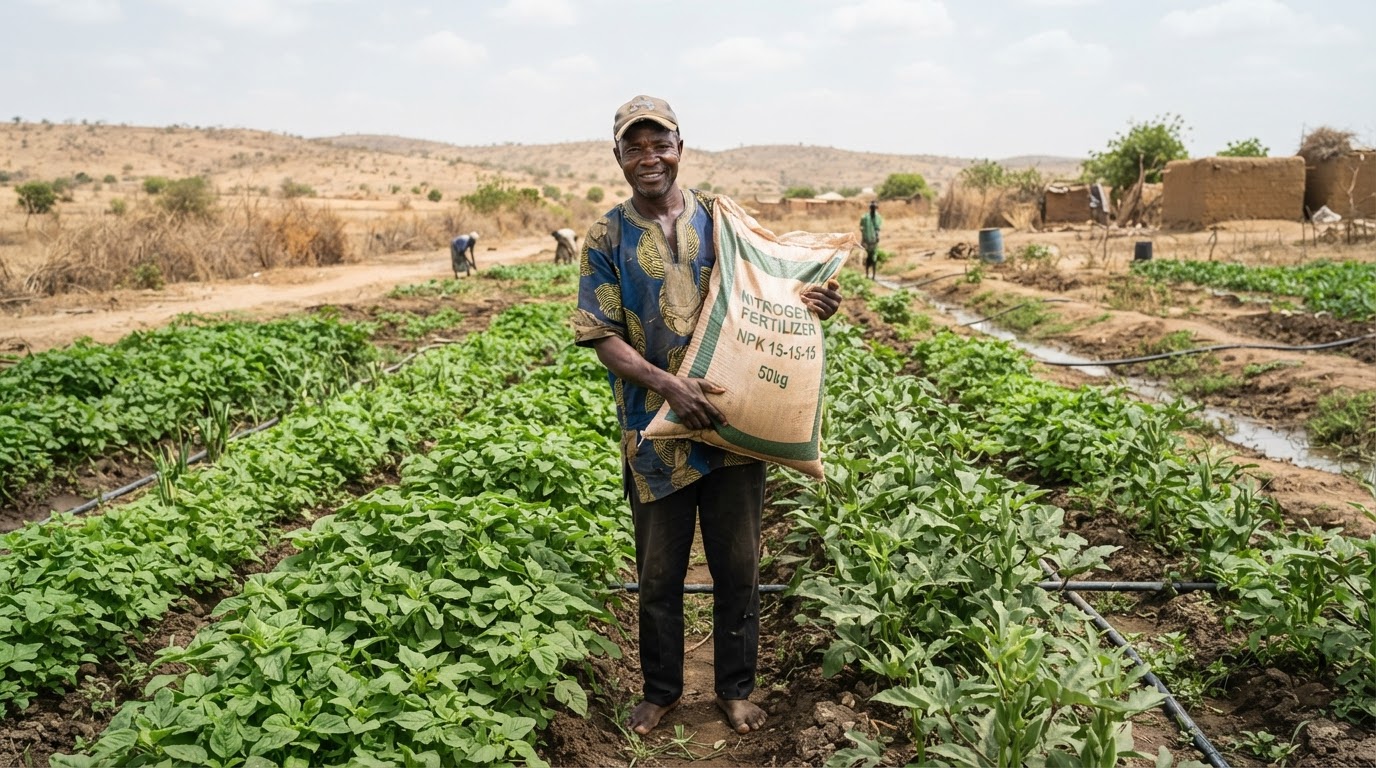
Nigeria’s plan to make three million bags of fertiliser available ahead of dry-season farming could ease one of the most persistent pressures on farmers: the cost of getting crops into the ground. But the size of an intervention is only one measure of its value. What matters is whether the fertiliser reaches farmers in time, at a price they can afford, and in the quantities their farms actually need.
Vice President Kashim Shettima announced the directive on November 16 after a meeting with fertiliser industry stakeholders. The government says available stocks and raw materials could support production of about three million bags, while blending facilities and existing finished-product supplies could make distribution possible within the planned window.
Timing is everything
Dry-season farming depends on irrigation, reliable water access and a farmer’s ability to plan inputs around planting. Fertiliser that arrives after planting or outside the period when crops need it may have limited value, even if the government eventually distributes the full quantity.

For small-scale farmers, buying inputs is often a sequence of difficult decisions. Fertiliser costs compete with spending on seed, water pumping, labour, land preparation and transport. When cash is limited, farmers may apply less fertiliser than recommended, delay purchases or cultivate smaller areas. A cheaper supply delivered late can still leave farmers with a missed planting opportunity.
The intervention therefore needs a clear timetable tied to the different dry-season crops and locations. Distribution should not be treated as a single nationwide event. The needs of irrigated wheat, rice, vegetables and other crops differ, as do local water systems and planting calendars.
Price matters
The announced intervention is intended to make fertiliser more affordable, but the public information so far is stronger on production capacity and available stock than on the final price farmers will pay. The official announcement describes the supply target and industry arrangements; a detailed public price schedule, eligibility rules and distribution locations will be essential to judge the intervention on its merits.
Fertiliser prices at the farm gate can include more than the product itself. Transport, storage, handling and the distance between blending plants and rural communities all affect what a farmer pays. If distribution is left to poorly coordinated channels, the benefits of additional supply may not be evenly shared.
Government will need to publish where the fertiliser is being delivered, the price at each point, the quantities allocated and the criteria used to identify beneficiaries. That information would help farmers plan and give the public a way to distinguish actual delivery from announced production.
Moving supplies
Fertiliser producers have indicated that raw materials could support the target, and industry representatives have described finished stocks available for immediate release. These are useful starting points, but they do not prove that farmers have received the product.
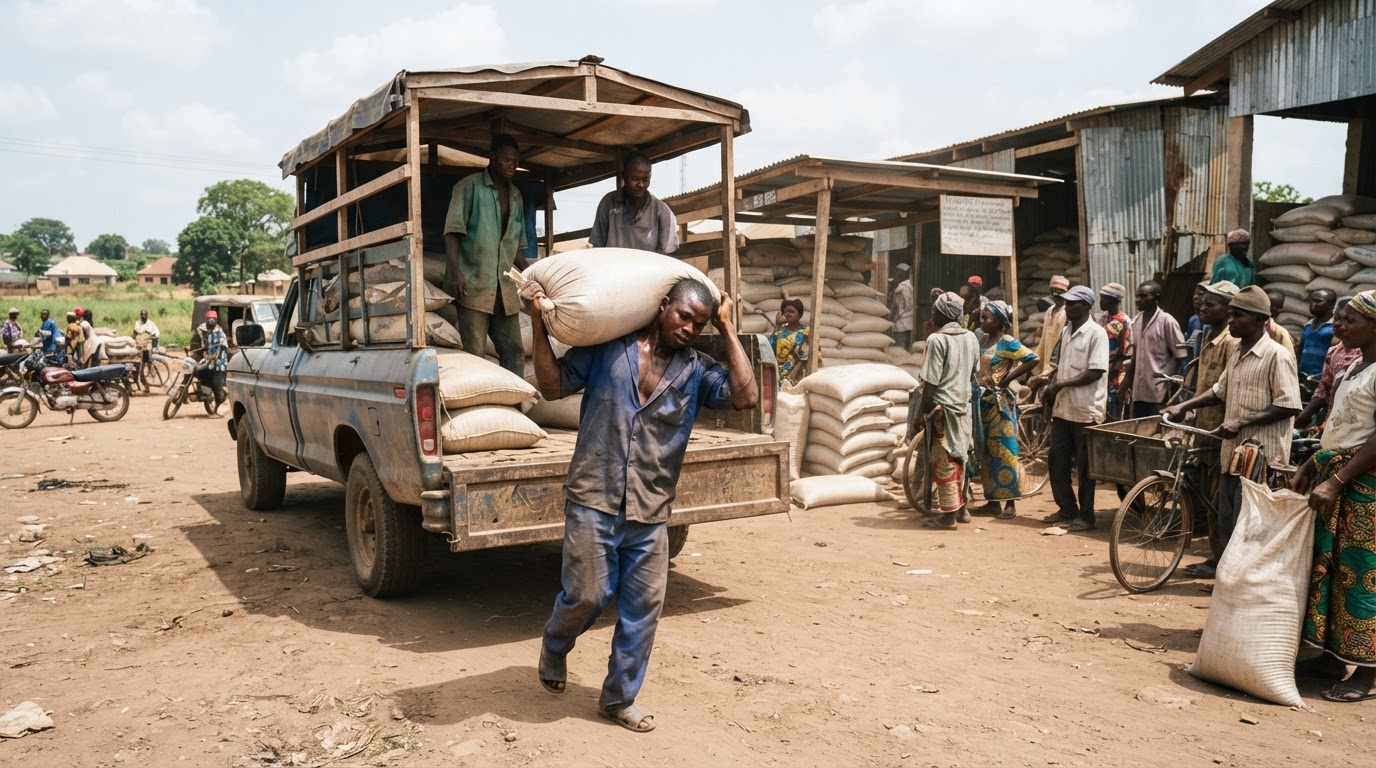
The supply chain still has to move fertiliser from factories and warehouses to local distribution points, prevent diversion, and ensure that rural farmers can obtain it without unnecessary charges or delays. Distribution becomes particularly important in communities where transport costs are high and farmers are far from major markets.
Past input programmes have repeatedly shown why beneficiary lists and delivery records matter. A programme may reach registered farmers but still exclude tenant farmers, women who farm family plots, smaller producers or people in remote communities whose paperwork is incomplete. The delivery model should be simple enough for genuine farmers to participate without allowing middlemen to capture the benefit.
Beyond fertiliser
Fertiliser can improve crop performance when it is appropriate for the crop, soil and conditions. It cannot compensate for poor water access, damaged soil, unsuitable seed, pests or a lack of practical advice. Farmers also need guidance on correct application to avoid waste and protect soil and water.
That is why the supply initiative should be connected to extension services, soil testing, irrigation support and accessible information on application rates. The government has recently announced other agricultural support measures, but their impact will depend on how well programmes work together at farm level rather than operating as separate announcements.
A farmer’s test
Three million bags is a substantial target. Yet the most useful measure of the intervention will be what farmers can confirm: whether the product is available when they need it, whether the price is lower than comparable market supplies, whether the quality is consistent and whether access is fair.
As the dry-season planting window opens, the government has an opportunity to demonstrate that input support can be delivered with transparency and urgency. If fertiliser reaches farmers early and affordably, it could help them expand cultivation and improve output. If distribution is slow, opaque or costly, the intervention may struggle to deliver the gains its headline figure promises.