


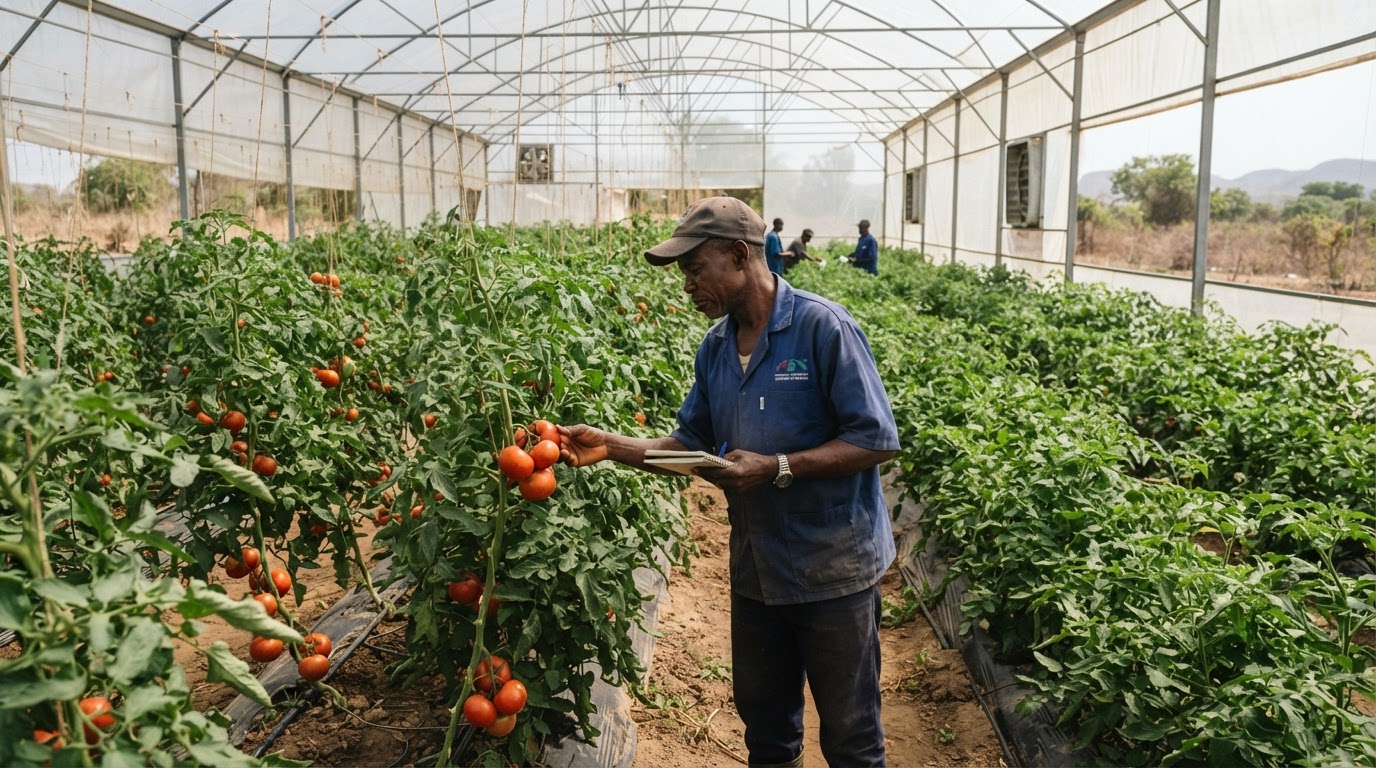
Nigeria’s plan to deploy 10,000 climate-smart greenhouses under a $33 million investment agreement presents a new route for expanding vegetable production and reducing farmers’ exposure to erratic weather. The initiative is ambitious, but its most important question is not how many structures will be installed. It is whether farmers can operate them profitably, maintain the technology and sell produce at prices that cover their costs.
The partnership involving the Special Agro-Industrial Processing Zones programme, the Bank of Agriculture and Turkish company Direkçi Group will begin with a $3 million pilot involving 1,000 greenhouse units in Kano. The agreement outlines financing, installation, technical training and plans to connect farmers to processors and other buyers.
Why greenhouses
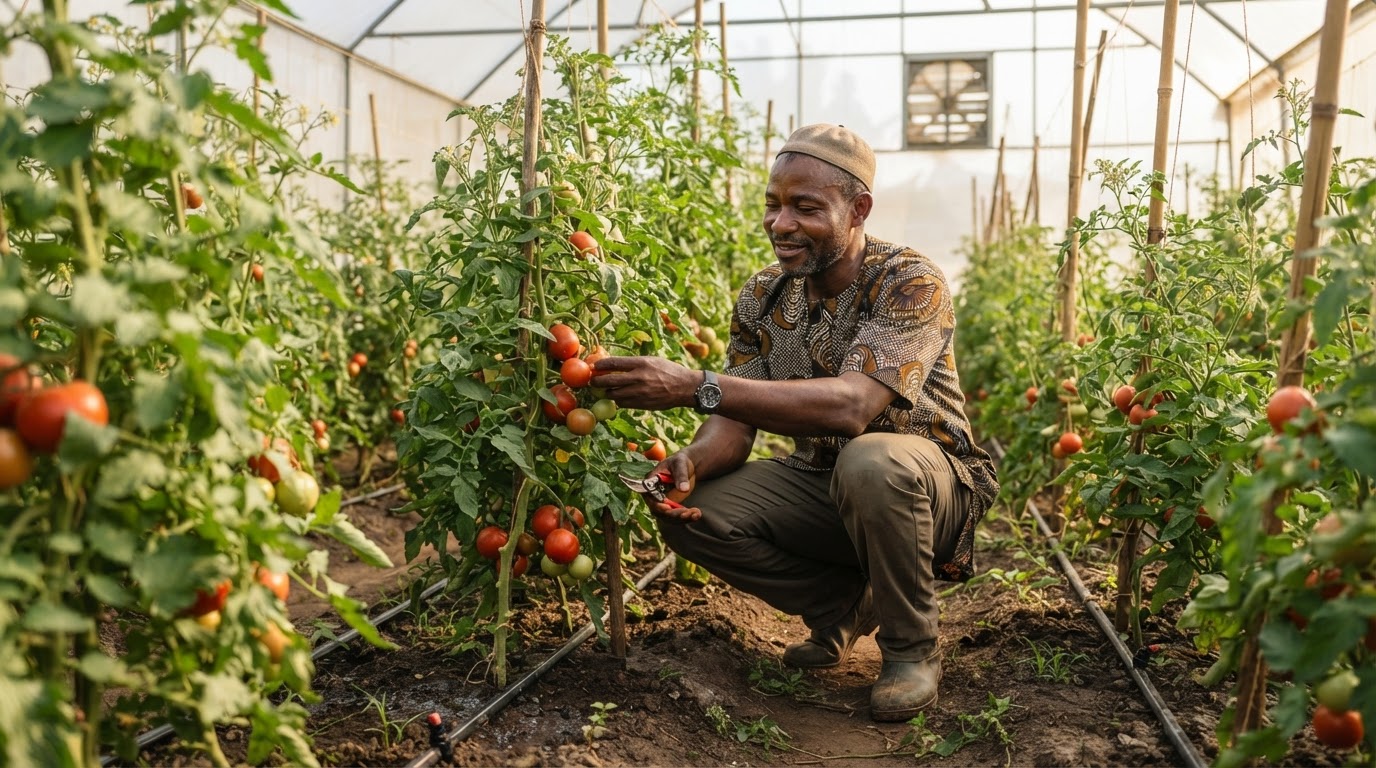
Open-field vegetable farming is exposed to rainfall swings, heat, pests and seasonal supply fluctuations. Greenhouses allow farmers to manage some growing conditions more closely, including water and temperature, and can make it easier to plan production during periods when outdoor cultivation is difficult.

For tomatoes and peppers, more controlled production could help improve quality and consistency, potentially reducing some losses and supporting processors that need predictable supplies. If production can be scheduled more reliably, farmers may also have opportunities to supply markets beyond the peak season when prices are often affected by seasonal gluts.
These benefits are possible rather than guaranteed. Greenhouses require skilled management, regular maintenance, water, appropriate seed, pest control and often energy. Poor management can turn a protected structure into an expensive asset that produces little revenue.
Financing farmers
The pilot combines private-sector investment with agricultural credit. Direkçi Group is expected to contribute financing and technology, while the Bank of Agriculture will provide a credit facility for participating farmers. The project also includes a repayment period and an initial moratorium intended to give farmers time to establish production.
Credit can make the structures accessible to farmers who could not pay for them upfront. But the terms must be practical. Farmers need to know what their total obligation is, what happens if harvests fail, whether repayment is linked to crop sales and who bears the cost of repairs. Financing should not place farmers under pressure to repay before the greenhouse has generated a dependable income.
Smallholders may also need working capital beyond the greenhouse itself. Seedlings, fertiliser, water, labour, packaging, transport and pest management all require money throughout the production cycle. A programme that finances the structure but leaves operating costs uncovered may still exclude farmers with limited savings.
Finding buyers
Greenhouse output could increase, but farmers still need buyers. The project’s proposed off-take arrangements are intended to connect participating growers with tomato processors and other commercial buyers. That is a crucial part of the model because fresh produce is perishable and prices can fall when many farmers harvest at the same time.
Before scaling up, agreements should spell out quality requirements, expected volumes, collection arrangements, pricing methods and what happens when buyers reject produce. Farmers should not be left with a new production capacity but no clear outlet. A reliable buyer can help reduce uncertainty, but the arrangement must be fair and transparent.
Processing firms also need dependable supply, not just an announcement of a new farming programme. The pilot should demonstrate that it can deliver produce at the volume, quality and cost required by buyers while providing farmers with a viable margin.
Skills and upkeep
Greenhouse farming differs from conventional cultivation in its management demands. Farmers need to understand ventilation, irrigation, temperature, crop nutrition, disease prevention and harvest timing. Technical support should be available throughout the production cycle, not limited to a brief introductory training.
There is also a long-term opportunity to build local expertise in greenhouse construction, maintenance, irrigation systems, spare parts and crop management. If all key components and repairs depend on imported services, the costs could rise and farmers may struggle to keep facilities operating after the initial programme support ends.
Prove the model
The Kano pilot should be evaluated before expansion using clear indicators: greenhouse utilisation, crop yields, operating costs, farmer income, loan repayment, quality of produce and the volume sold to commercial buyers. Results should also show which farmers benefited and whether women and smallholders could participate without unreasonable barriers.
Greenhouses can help Nigeria produce vegetables more consistently and reduce some climate risks. But protected farming is not a shortcut around the problems of finance, energy, water, logistics and market coordination. The $33 million programme will matter most if the pilot demonstrates a business model farmers can sustain after the initial investment and technical support have ended.