


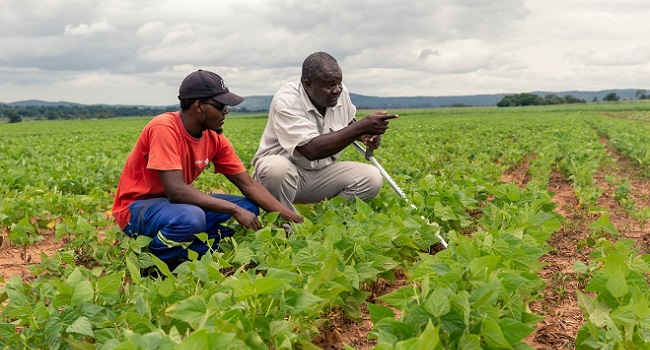
Stakeholders in Nigeria’s agricultural sector have called for urgent reforms to improve access to land for smallholder farmers, particularly women and youths, as ActionAid Nigeria revealed it has trained over 135,000 farmers in climate-smart agricultural practices.
The call was made at a national town hall meeting on “Land Use Act and Alternative Frameworks for Access and Control over Land for Smallholder Women Farmers and Young People in Agroecology” held in Abuja.

Related Posts:
- Infractions Bothering on Employees’ Taxes & Payment…
- Where Did the Money Go? Osun Spent Just 34% of…
- Zambian Youth Farmer Harvests 100 Bags of Local…
- Implied Terms in Contracts: Balancing Freedom and Protection
- Why Nigerian Farmers Still Struggle to Reach Markets
Powered by Contextual Related Posts
Speaking at the event, the Country Director of ActionAid Nigeria, Andrew Mamedu, said while significant progress had been made in building farmers’ capacity, access to land remains a major barrier to agricultural productivity and sustainability.
According to him, the organisation has equipped over 135,000 smallholder farmers and youths, mostly women, with skills to adopt climate-resilient farming practices through the Strategic Partnerships for Agroecology and Climate Justice in West Africa (SPAC) project.
He emphasised that land is central to agroecology, rural livelihoods, and food security, noting that it goes beyond being just a productive asset.
Mamedu said the organisation has also supported farmers to access and control land through collaboration with communities, traditional institutions, and government agencies.
He cited examples, including the allocation of three hectares of land to Ojoloro Agbe Farmers’ Cooperative in Ugbe community, Akoko North-East Local Government Area, as well as similar interventions in Delta, Ondo, and Jigawa states.
“These efforts show that progress is possible, but systemic barriers still limit equitable access to land, especially for women and young people,” he said.
He identified challenges such as competing land use for residential and commercial purposes, poor infrastructure, and long distances to farmlands as key constraints.
Mamedu added that the Land Use Act, though designed to regulate land administration, has limitations in ensuring equitable access and tenure security due to bureaucratic bottlenecks, weak enforcement, and socio-cultural constraints.
Also speaking, the Permanent Secretary, Federal Ministry of Agriculture and Food Security, Dr Marcus Ogunbiyi, said access to land remains a major challenge for millions of Nigerians, particularly women and youths.
Represented by the Director of Planning and Policy Coordination, Mr Tanimu Ibrahim, Ogunbiyi noted that structural, legal, and socio-cultural barriers continue to undermine agricultural productivity and inclusive economic growth.
He said the town hall meeting provided an opportunity to examine alternative frameworks that could promote inclusive and gender-responsive land governance.
The News Agency of Nigeria (NAN) reports that the meeting brought together representatives of government institutions, development partners, traditional rulers, civil society organisations, farmer groups, women and youth networks, and the private sector.
Participants emphasised that addressing land access challenges is critical to improving food security, strengthening rural livelihoods, and building resilience against climate change.