



When seasonal rain stops before crops are ready for harvest, the immediate loss is carried by farmers who have already spent money on seed, labour and land preparation. Reports from communities in the Federal Capital Territory this season show how exposed rain-fed agriculture can be when actual weather conditions differ from what farmers expected.
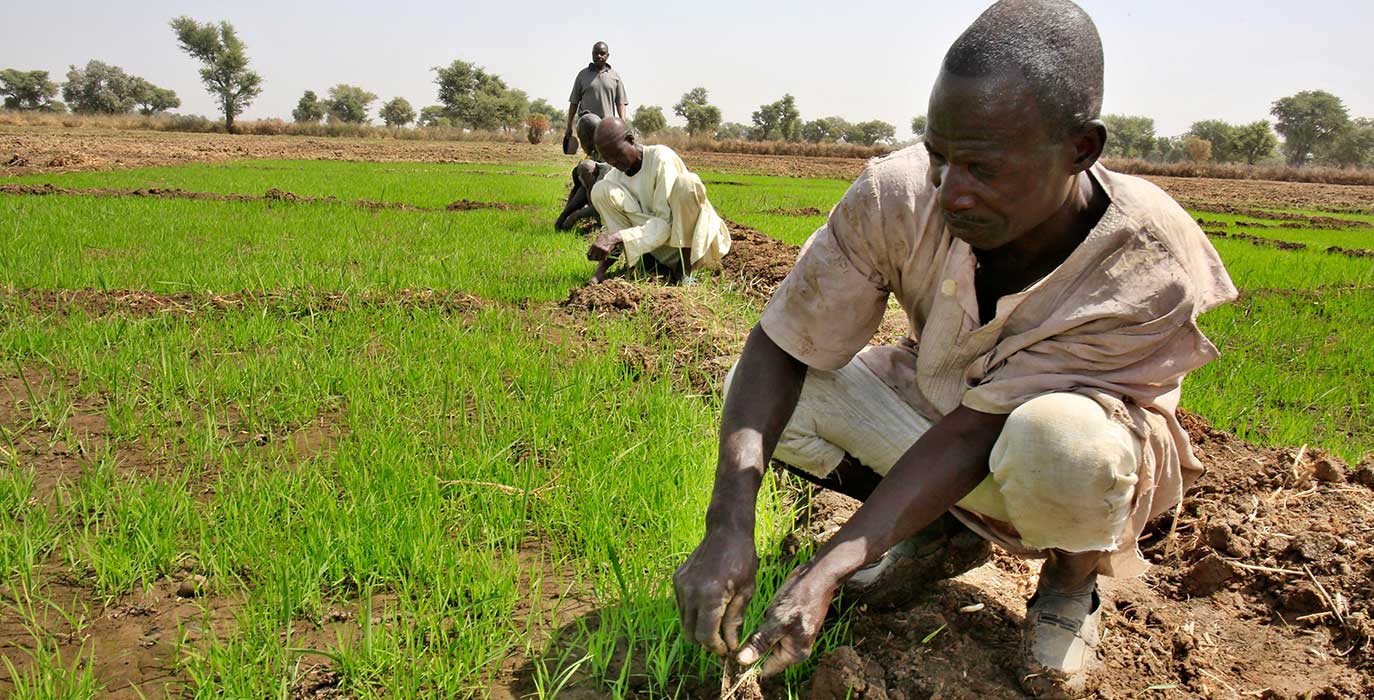
Farmers in Giri and Anagada in Gwagwalada Area Council, and Pai in Kwali Area Council, told agricultural scientist Joel Benson that rainfall in their areas stopped around the second week of October. A November 5 report by Global Agriculture said late-planted beans were struggling, some rice had not matured and guinea corn was showing signs of drying.
These accounts do not establish a region-wide pattern or prove that El Niño caused the rainfall to stop. They are local reports from farmers. But they illustrate a wider agricultural problem: growers who depend on rainfall have limited options when a dry spell arrives while crops are still developing.

Rain-fed farmers have little room to absorb a shock
A shorter growing period can affect crops differently depending on planting dates, variety, soil moisture and the stage of development. Beans planted late may not have enough time to establish and produce well. Rice that has not matured can be exposed to moisture stress, while cereals such as guinea corn may withstand dry conditions better than some crops but still suffer when water becomes inadequate at a critical stage.
For farmers without irrigation, the options are limited once rainfall has stopped. They may have to accept a lower harvest, spend more on water where that is possible, or lose part of the investment already made. A poor harvest can then reduce the money available for the next planting season, making one weather shock carry consequences beyond a single crop cycle.
Climate information is useful only if farmers can act on it
Seasonal forecasts can help farmers plan, but a forecast alone cannot protect a crop. Information has to reach farming communities in time, use language and channels farmers understand, and offer advice that fits local conditions. Farmers also need access to extension officers who can explain planting windows, crop choices and water-management options.
Even accurate forecasts describe probabilities, not guarantees. Rainfall can vary from one community to another, and conditions on a particular farm may differ from the broader outlook. This makes regular local updates and practical advice important, especially for farmers deciding whether to plant late or invest in crops with different maturity periods.
New climate funding must reach farms and watersheds
The scale of the adaptation challenge is reflected in a new financing decision by the World Bank. On November 6, it approved an additional US$500 million for Nigeria’s Agro-Climatic Resilience in Semi-Arid Landscapes (ACReSAL) project. The World Bank said the funding is intended to expand landscape restoration, watershed rehabilitation, water management and rural livelihoods across northern Nigeria.
By 2031, the additional financing is expected to support work across 1.4 million hectares and benefit 6.6 million people. The project operates in the 19 northern states and the Federal Capital Territory. Its focus on watersheds, land restoration and water management is relevant to agricultural resilience, although it should not be mistaken for an immediate irrigation solution for every farmer affected by a dry spell.
The important question is how these investments translate into water infrastructure, healthier landscapes and practical support in the communities most exposed to climate risks. Large financing commitments matter, but farmers will judge them by whether they can access water, protect their fields and recover when weather conditions disrupt production.
Adaptation cannot wait for the next crisis
For the FCT communities reporting early rainfall cessation, the actual harvest impact will need to be established through field assessments and crop data. It would be premature to turn a handful of farmer accounts into a claim about nationwide losses. But waiting for a national crisis before improving local preparedness would also be a mistake.
Farmers need timely weather information, accessible extension advice, suitable seed varieties, water-harvesting options and irrigation where it is technically and economically viable. Governments also need better local monitoring so that support can be directed to communities facing specific risks rather than relying only on broad seasonal projections.
The lesson from these reports is not simply that the rains stopped early in parts of the FCT. It is that the risks of rain-fed farming remain concentrated on growers who have few tools to respond when the season changes. Climate adaptation will become meaningful when those farmers can use information and infrastructure to protect the harvests on which their incomes depend.