


By Boluwatife Adedokun
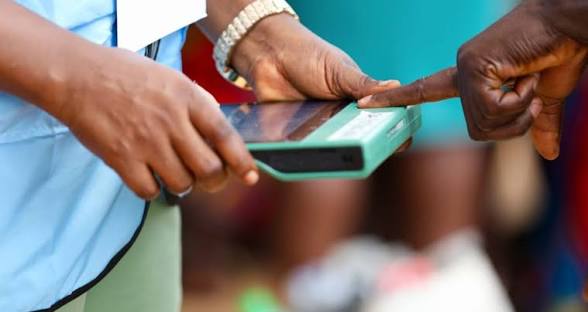
On Saturday, August 15, more than 2.3 million registered voters across Osun State will head to 3,763 polling units to elect a governor. But beyond the political contest between candidates and parties, another contestant will be under intense scrutiny: technology. INEC plans to deploy 4,427 Bimodal Voter Accreditation System (BVAS) devices for the election, making technology one of the most important determinants of whether the poll succeeds or fails.
The 2026 Osun governorship election is not just another off-cycle election. It is the last major governorship election before Nigeria’s 2027 general election and the second governorship election to be conducted under the new Electoral Act 2026. That reality has transformed Osun into a testing ground for a series of electoral reforms designed to improve transparency, strengthen result management and restore public confidence in the electoral process.

For the first time, the election will feature innovations such as downloadable Permanent Voter Cards (PVCs), electronic polling-unit result sheets and expanded electronic result validation procedures. Supporters of these reforms believe technology can reduce manipulation and improve transparency. Critics, however, warn that technological failures could create new opportunities for voter disenfranchisement and undermine public trust.
The question is straightforward: can technology guarantee a credible election in Osun?
The answer is much more complicated.
Why Technology Has Become Central to Nigerian Elections
Before the introduction of BVAS, Nigeria relied largely on manual accreditation.
Election officials checked voters’ names against the register, verified PVCs and manually documented the process. The system created opportunities for multiple voting, voter impersonation and disputes over accreditation figures.
To address these concerns, INEC introduced the Bimodal Voter Accreditation System.
The technology uses two methods to verify voters: fingerprint recognition and facial authentication.
If one verification method fails, election officials can rely on the other to confirm a voter’s identity.
The goal is simple: ensure that only legitimate voters participate in elections.
BVAS has also become an important component of election result management because it captures and uploads polling-unit data into INEC’s digital ecosystem.
The technology was initially welcomed as a major step toward reducing electoral fraud.
However, experience has shown that introducing technology into elections does not automatically eliminate problems.
Instead, it sometimes changes the nature of those problems.
What Exactly Is BVAS and How Does It Work?
On election day, a voter arrives at a polling unit with a PVC.
An election official scans the card using the BVAS device.
The system then verifies the voter through fingerprints or facial recognition.
Once accreditation is completed, the voter receives a ballot paper and proceeds to vote.
At the end of voting, election officials complete the result sheet and upload relevant election data.
The process appears simple.
In reality, several things can go wrong.
A fingerprint may not be recognized.
Facial verification may fail.
A PVC may not correspond with information stored in the database.
The device itself may experience technical difficulties.
Any of these situations can slow down voting and create tension at polling units.
The Mock Accreditation Exercise Exposed Important Weaknesses
Perhaps the biggest warning sign ahead of Saturday’s election emerged during INEC’s mock accreditation exercise.
The commission conducted the exercise in 36 polling units across the state’s three senatorial districts to test the functionality of BVAS before the election.
However, election observers reported that some devices temporarily failed to recognize fingerprints, facial features and older voter records. Yiaga Africa identified the issue as one of the most significant concerns ahead of the election.
INEC explained that some facial verification failures were linked to compatibility problems involving older voter records that had not been revalidated.
The explanation may be technically accurate.
But for voters, technical explanations often mean very little.
A voter who cannot be accredited after standing in line for hours is unlikely to distinguish between a software problem and an administrative error.
The consequences can be severe.
Delays can increase frustration.
Frustration can trigger confrontations.
Confrontations can escalate into violence.
Most importantly, eligible voters can lose the opportunity to participate in the election.
Downloadable PVCs Could Expand Access, but They Also Raise New Questions
One of the most significant reforms introduced ahead of the Osun election is the introduction of downloadable PVCs. The initiative was designed to help eligible voters who were unable to obtain physical cards before the election.
The policy represents a major departure from previous elections, in which only physical PVCs were accepted.
Supporters argue that downloadable cards could reduce disenfranchisement.
Critics, however, have raised several concerns.
Do all voters have access to smartphones?
Will older voters be able to navigate the process?
What happens in communities with poor internet connectivity?
How effectively have voters been educated about the new policy?
These questions became even more important after disruptions affected PVC collection in some parts of Osun, including Odo-Otin Local Government Area. Election observers have warned that limited access to digital services could prevent some voters from benefiting from the new system.
Technology can only improve elections when citizens understand how to use it.
Without effective voter education, innovation can unintentionally create new barriers.
IReV and Electronic Results: Another Critical Test
Accreditation is only one part of the electoral process.
Result management is equally important.
This is where the INEC Results Viewing Portal, popularly known as IReV, becomes significant.
IReV is designed to improve transparency by making polling-unit result sheets publicly accessible.
Under the new electoral framework, the electronic management and validation of polling-unit results have become central to election administration. Election observers consider the Osun election a crucial opportunity to determine whether electronic result transmission can function effectively on a larger scale before the 2027 general election.
There are reasons for concern.
Following the June 2026 governorship election in Ekiti State, some stakeholders complained that election results were not transmitted directly from polling units in several locations. The concerns prompted calls for INEC to strengthen transparency in Osun.
To independently assess the process, Yiaga Africa plans to deploy its Election Result Analysis Dashboard 2.0, an auditing system designed to monitor the availability, accessibility and timeliness of results uploaded to IReV.
If the system works, public confidence could improve.
If it fails, skepticism about electronic result management could deepen.
Technology Alone Cannot Stop Vote Buying
One misconception about election technology is that it can solve every electoral problem.
It cannot.
BVAS cannot prevent politicians from offering money to voters.
Electronic result transmission cannot stop intimidation.
Digital systems cannot eliminate hate speech or political violence.
Vote buying remains one of the biggest threats to electoral integrity.
Election observers have already documented the distribution of money and gift items by political actors ahead of the election.
Technology can protect votes after they have been cast.
It cannot guarantee that those votes were cast freely.
The Human Factor May Determine the Election More Than Technology
The success of any electoral technology depends on the people operating it.
Election officials must be adequately trained.
Technical support teams must respond quickly when problems arise.
Security personnel must protect election materials and officials.
Political parties must respect the rules.
Citizens must understand the voting process.
Without these elements, even the most sophisticated technology will struggle.
INEC has repeatedly assured voters that it is fully prepared for the election and has emphasized its commitment to transparency and professionalism. The commission has also extended PVC collection and conducted a statewide mock accreditation exercise to test its systems.
Whether those preparations are sufficient will become clear on election day.
The Bigger Question Is 2027
Ultimately, the significance of the Osun election extends far beyond the state’s borders.
The election will provide an early indication of how Nigeria’s new electoral technologies might perform during the 2027 general election.
Can downloadable PVCs expand participation?
Can BVAS operate without widespread failures?
Can electronic result management increase transparency?
Can technology rebuild public trust in elections?
The answers may begin to emerge on Saturday.
And whatever happens in Osun is likely to shape discussions about election management across Nigeria over the next year.