


By Boluwatife Adedokun
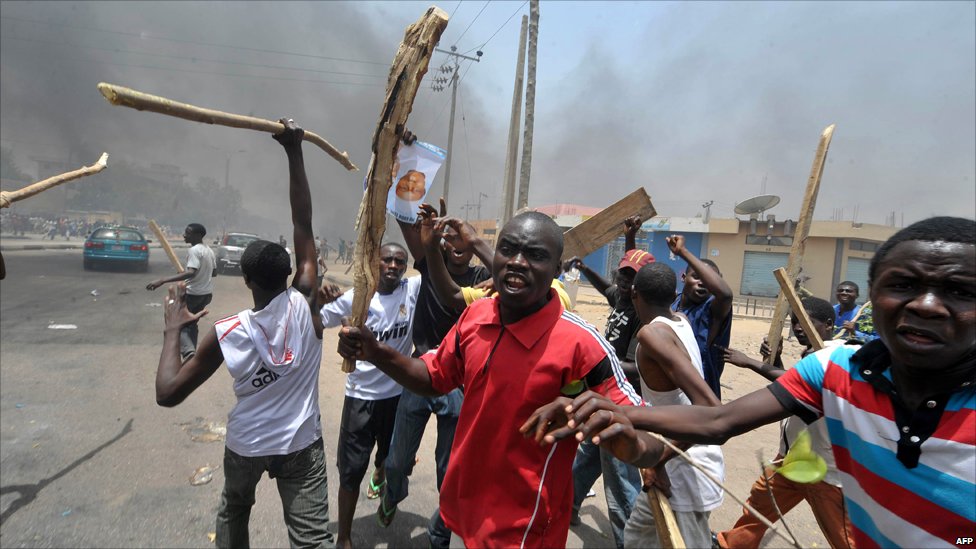
From the bloody 2007 contest to the disputed 2018 rerun and the 73 election-related violent incidents recorded ahead of the 2026 poll, Osun’s problem is no longer simply about election-day violence. It is about a political system in which winning the governorship has repeatedly become a fight over power, patronage, influence and survival.

For nearly two decades, Osun’s governorship elections have carried a level of political tension that distinguishes the state from much of the Southwest.
The pattern did not begin with the 2026 election.
It goes back at least to 2007, when the governorship contest between the Peoples Democratic Party’s Olagunsoye Oyinlola and Action Congress candidate Rauf Aregbesola became one of Nigeria’s most prolonged electoral disputes. Oyinlola was declared winner, but Aregbesola challenged the result. After years of litigation, the Court of Appeal declared Aregbesola governor in 2010.
The significance of the episode was bigger than the eventual change of government. It reinforced the perception that in Osun, the governorship was a prize worth fighting for even after the votes had been counted.
The 2007 election was also associated with deaths and violence. The Osun State Government later reported that about 12 people died during the election crisis in parts of the state, including Ikirun, Igbajo, Ila-Orangun, Ile-Ife and Ilesa.
That history matters because electoral violence rarely begins on election day. It develops from unresolved rivalries, distrust and the belief that losing political power carries enormous consequences.
A state where political competition has repeatedly become personal
By 2014, Osun had become one of the country’s most closely watched governorship battlegrounds.
Aregbesola, now seeking re-election, faced PDP candidate Iyiola Omisore. The election attracted an extraordinary security deployment, with reports putting the number of security personnel deployed at about 73,000.
The scale of the deployment demonstrated the extent to which the state had become securitised around elections.
Yet the 2014 contest also provides an important lesson: Osun’s problem is not that its people are inherently violent.
The election itself did not reproduce the bloodshed associated with 2007.
Instead, it demonstrated how the fear of violence had become embedded in the electoral process.
That distinction is important. When a state requires massive security deployment simply because political actors and voters expect trouble, the problem has moved beyond individual clashes. It has become institutional.
2018 exposed the fault lines
If 2007 established the historical pattern, the 2018 governorship election exposed just how dangerous an extremely competitive election could become.
The first election between APC candidate Gboyega Oyetola and PDP candidate Ademola Adeleke produced a margin of only 482 votes. Because the margin was smaller than the votes in polling units where results had been cancelled, INEC declared the election inconclusive and conducted a rerun.
The rerun became the decisive battle.
International observers from the United States, United Kingdom and European Union said they witnessed incidents of interference and intimidation of voters and received reports of harassment involving party monitors, journalists and domestic observers.
YIAGA Africa’s Watching The Vote also documented incidents of violence, harassment and intimidation during the rerun, including an incident in Orolu where political thugs were reported to have attacked PDP supporters and blocked voters from accessing a polling unit.
The significance of 2018 lies partly in the closeness of the contest.
When two candidates are separated by only a few hundred votes, every polling unit becomes politically important. A cancelled result can determine the winner. A single act of intimidation can potentially affect turnout. And every disputed ballot becomes more consequential.
Osun’s 2018 election therefore demonstrated how a fiercely competitive political environment can turn relatively small incidents into major threats to electoral credibility.
2022 proved violence is not inevitable
There is, however, another side to Osun’s history.
The 2022 governorship election was generally peaceful, despite the fear generated by the 2018 experience.
The Nigeria Civil Society Situation Room reported that voters largely conducted themselves peacefully and that there was no tension in 90 per cent of the polling units observed.
That election is crucial to understanding Osun.
It proves that the state’s electoral violence is not an unavoidable feature of its society.
The same voters who had lived through the tensions of previous elections were able to participate peacefully when the political environment and security arrangements improved.
There was still a fatal incident: Situation Room reported that PDP officer Jide Jooba was killed by political thugs in Ikire. But overall, the election represented a marked improvement from 2018.
This means the question should not be, “Why are Osun people violent?”
It should be, “What conditions make violence more likely in Osun elections?”
The answer begins with the value attached to political power
One major explanation is the enormous importance attached to the governorship.
The governor controls access to state resources, appointments, contracts and political networks. For political actors who have invested years building structures across the state, losing the governorship can mean losing access to much of that influence.
That makes the contest more than an ordinary election.
It becomes a struggle over who controls the machinery of political power.
Osun has also experienced repeated changes in political control. The PDP lost power to Aregbesola’s ACN in 2010. The APC retained power under Oyetola, before Adeleke defeated him in 2022.
That history means neither major political camp can comfortably assume that power belongs to it permanently.
Competition is healthy for democracy.
But when political actors believe that losing means exclusion from political influence, competition can become dangerous.
Why Osun stands out in the Southwest
It would be inaccurate to say that Osun is the only Southwest state with electoral violence.
Ogun, Oyo, Ekiti and Ondo have all experienced political violence, intimidation or contentious elections at different times.
The difference is the persistence of the pattern in Osun.
Its electoral history combines disputed governorship results, prolonged litigation, intense party rivalry, allegations of intimidation and recurring politically linked violence.
The 2022 election also provides a useful comparison with Ekiti. In its pre-election statement, Situation Room described the Ekiti governorship election as relatively peaceful but noted a high level of vote trading around polling units. It then specifically noted the fear surrounding the Osun election because of incidents from the 2018 contest.
That comparison is significant.
It suggests that the problem cannot simply be blamed on Southwest political culture.
Different states within the same region experience different electoral outcomes.
Osun’s particular political history matters.
2026: history appears to be repeating itself
The warning signs ahead of the August 15, 2026 governorship election are therefore particularly troubling.
A Kimpact Development Initiative pre-election security assessment recorded 73 election-related violent incidents resulting in 29 deaths ahead of the poll. It identified Osogbo as the major hotspot and said 54 of the 73 incidents occurred between May and July as political activities intensified.
The report is especially significant because it argues that the violence is becoming increasingly strategic rather than merely spontaneous.
According to the assessment, violence is concentrated around politically significant communities and could be used to intimidate voters, suppress turnout and influence electoral outcomes.
That changes the nature of the problem.
If violence is deliberately used to influence who participates, where people feel safe enough to vote and which political strongholds can mobilise freely, then it is no longer simply a security problem.
It is an attack on the electoral process itself.
Recent reporting has also highlighted escalating tensions in locations including Osogbo, Ede, Ife, Oriade, Ijebu-Ijesha, Ilobu and Ikire. Amnesty International has called for adequate security and warned about violence involving supporters of political actors.
The lesson from nearly 20 years of elections
The history of Osun’s governorship elections tells a complicated story.
2007 showed that an election could produce violence and remain politically unsettled for years.
2014 demonstrated the extraordinary security measures required to manage the state’s political tension.
2018 showed how a razor-thin contest could degenerate into intimidation and violence around a rerun.
2022 demonstrated that peaceful voting is possible.
And 2026 is once again being preceded by alarming levels of election-related violence.
The common thread is not the ordinary voter.
It is the intensity of the political competition.
Osun voters have repeatedly shown that they can participate peacefully. The 2022 election provides perhaps the clearest evidence.
The deeper problem is that political power remains extraordinarily valuable, while the institutions responsible for managing competition and punishing electoral offences have struggled to eliminate the incentives for violence.
What must change
More security personnel alone will not solve Osun’s problem.
Security is necessary, but it is only a short-term response.
The longer-term solution requires political parties and their leaders to take responsibility for the behaviour of their supporters. Election-related killings and intimidation must be investigated and prosecuted, regardless of the political affiliation of the perpetrators.
There must also be stronger monitoring of political mobilisation, campaign financing and the recruitment of young people into political structures that can be turned into instruments of violence.
Most importantly, political actors must accept that losing an election is not political death.
The experience of Osun shows that power changes hands.
Oyinlola lost power.
Aregbesola lost power.
Oyetola lost power.
Adeleke’s victory in 2022 demonstrated that political control can change through the ballot.
That is precisely why the ballot must be protected.
Osun’s electoral history should not be read as evidence that violence is inevitable. It should be read as a warning about what happens when political competition becomes a struggle for survival.
The challenge before the state is therefore bigger than conducting one peaceful election.
It is to break the cycle.
Because until political actors, parties, security agencies and institutions make violence too costly to use as an electoral strategy, Osun’s governorship elections will continue to carry the weight of a history that began long before the next ballot is printed.