


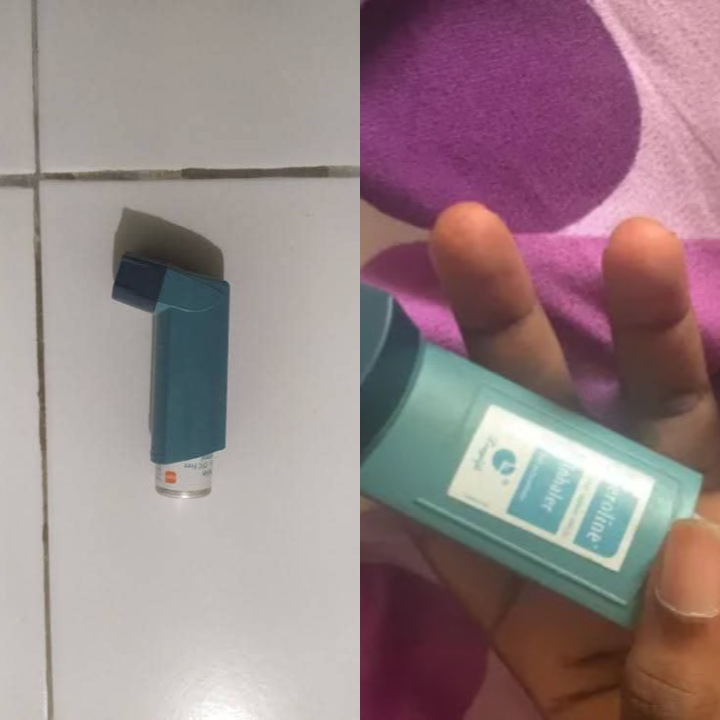
By Omolara Lawal
Asthma is more than an occasional struggle for breath. In 2023, an estimated 363 million people worldwide were living with the condition, which caused 442,000 deaths, according to the World Health Organization (WHO). WHO says under-diagnosis and under-treatment remain challenges, particularly in low- and lower-middle-income countries, while inhaled medication can control symptoms and allow people living with asthma to lead normal, active lives.
Nigeria is also affected by the burden. In a 2025 statement marking World Asthma Day, the Federal Ministry of Health and Social Welfare said Nigeria recorded 8,192 asthma-related deaths in 2020, citing WHO data. The ministry also reiterated the need to improve access to life-saving inhaled treatments and listed measures including the removal of import tariff duties on essential pharmaceutical products, including inhaled medications.

But behind those figures are students trying to navigate ordinary university life while living with a condition that can suddenly turn a walk to class, a dusty lecture hall or a change in weather into a frightening struggle for breath.
At Adekunle Ajasin University, Akungba-Akoko (AAUA), students living with asthma say dusty classrooms, changing weather, academic stress, smoke and poor ventilation can make ordinary routines difficult. Some do not leave their hostels without an inhaler. Others constantly think about where they can get help if an attack comes without warning.
For some, there is another burden that is harder to measure: the shame of mockery. Alongside the fear of an asthma attack, some students worry about being treated differently, seen as a liability or misunderstood by people around them.
Abigail Ayegbusi, a Mass Communication student who has lived with asthma for about five years, knows the uncertainty that comes with trying to manage the condition while keeping up with university demands.
“Living with asthma on campus has been very challenging. Stress is one of the major things that can trigger an asthma attack, yet as a student, I have to attend lectures, meet deadlines, and move around campus every day,” she said.
When a School Day Turns Into an Emergency
For Abigail, avoiding asthma triggers is not always easy in a university environment.
Dusty lecture halls, long walks between classes and academic pressure are part of everyday campus life, making it difficult to completely avoid situations she believes can worsen her condition.
She recalled a period when she ignored warning signs for about a week, hoping that her condition would improve on its own.
“I had ignored the warning signs for about a week, hoping I would get better. Instead, my condition became severe. I had to miss an examination because I was rushed to the hospital. At that moment, I genuinely feared for my life,” she said.
During her first and second years at the university, Abigail said she experienced asthma attacks as frequently as five times in a month.
Some of the more severe episodes required her to be transported by ambulance to the Federal Medical Centre, Owo, while receiving oxygen.
“It was one of the worst experiences I’ve ever gone through,” she said.
Evidence from another Nigerian university setting also shows why asthma among students deserves attention. A 2018 study involving 1,485 university students in Ilorin, published in the Ethiopian Journal of Health Sciences, found that asthma prevalence estimates ranged from 10.4 per cent to 24.1 per cent, depending on the definition used to identify the condition.
The researchers cautioned that differences in the definitions used to identify asthma can produce substantially different prevalence estimates.
The study, therefore, does not establish the prevalence of asthma among AAUA students, but it provides relevant evidence from a Nigerian university population.
When Help Is Out of Reach
For some students, managing asthma also means dealing with the fear of having an attack when their medication is not immediately available.
Abigail recalled an occasion when she suffered an attack without her inhaler. Fortunately, a course mate had one and allowed her to use it.
“There was a time I had an asthma attack without my inhaler. Fortunately, one of my course mates had an inhaler and allowed me to use it, which helped me recover,” she said.
She said the support of her classmates has also extended to helping her obtain medication when she cannot afford it.
“My course mates have been very supportive and sometimes contribute money to help me buy my inhalers. Their support has been very encouraging during difficult moments,” she said.
For Gemma, a student who prefers to remain anonymous, living away from her family has made the situation more difficult. Her parents live in Lagos while she studies in Akungba-Akoko, Ondo State.
“Living with it on campus is really hard. My parents are not here to help me. Sometimes I call people for help, but nobody responds,” she said.
People have called me a liability. Someone close to me even said she couldn’t wait to leave my side because it was frustrating,” she said.
The Race to Find an Inhaler
Gemma recalled one asthma attack in which she urgently needed an inhaler and went to the university health centre seeking help.
According to her, she was told that an inhaler was not available at the time. She then left campus to obtain one elsewhere.
Before she reached the school gate, however, her breathing had become increasingly difficult.
“I started gasping for breath. The chemist immediately rushed me in and gave me an inhaler. Imagine if I didn’t have money with me. I could have died just like that,” she said.
Gemma said she still believes the university can provide better support for students living with asthma.8
“They are really supportive when it comes to asthma emergencies,” she said.
“The school should create a better and safe space for us, especially at Health Centre,” she said.
When Weather, Dust and Stress Become Triggers
For Oluwanifemi, a 400-level Mass Communication student, weather changes are among the challenges she associates with managing asthma on campus.
“Weather, rainy season and harmattan are our enemies. Also stress, then the common ones like dust, smoke, places without proper ventilation,” she said.
Oluwanifemi said people who have never experienced asthma attacks may underestimate what the condition feels like.
“Most people think it’s just shortness of breath. But it is more than that. They don’t know about the chest pain, weakness, low immunity, muscle pain and the near-death experiences we go through,” she said.
To manage her condition, Oluwanifemi said she keeps her inhaler and nose masks close, stays hydrated and covers herself during cold weather.
“I’m always with my inhaler and nose masks, I make sure I’m always hydrated. I cover up well during cold seasons. I also ensure I complete my medications and I take a lot of fruits for my immune system,” she said.
She also said she rests when she feels unable to control her symptoms and may stay away from class when she feels too weak.
“If I can’t get it under control or I’m feeling weak before class, I don’t go for the class,” she said.
The Financial Burden of Living With Asthma
Oluwanifemi said she spends at least ₦30,000 every month on inhalers and other medications, although the medication does not always last through the month.
“My inhalers and medications cost nothing less than ₦30,000 every month, and sometimes they don’t even last the whole month,” she said.
The Federal Ministry of Health and Social Welfare acknowledged the importance of access to inhaled treatment in its 2025 World Asthma Day statement, saying the Federal Government had taken steps to reduce barriers to care, including tariff waivers for essential pharmaceutical products such as inhaled medications.
But for students like Oluwanifemi, the issue is not only whether medication exists in the country. It is whether the medication is available and affordable when an attack occurs.
When Classmates Become Lifelines
Oluwanifemi said she has developed personal steps for dealing with an attack when her inhaler is not immediately within reach.
“I calm myself down first, find a well-ventilated place or fan myself. I always have my little fan with me too. I sit down straight, put my back against something and raise my head up. Then I take a very deep breath, in and out, controlled breathing,” she said.
She said she may also try to distract herself by counting backwards or counting her fingers in an irregular order before asking someone nearby to help her get her medication if it is within reach.
She added that even laughter can sometimes trigger an attack for her, making her conscious of activities that other students may take for granted.
“The moment I realise I can’t breathe, I begin to panic because of previous experiences,” she said.
“People are supportive, but many don’t know about asthma first aid. I’ve seen people trying to put spoons into an asthmatic person’s mouth or pouring water on the person. Those things can be dangerous,” she added.
Asthma Beyond the Classroom
Oluwanifemi said she had to deal with questions about her health during her Students Industrial Work Experience Scheme (SIWES), including an initial reluctance to provide her with a medical report because of her asthma.
“I had to fight against that during my SIWES. They didn’t want to give me a medical report at first.
“I believe there should be more awareness about asthma so that people can understand that those living with the condition can still live normal and go on with their productive lives if they receive support and avoid their triggers”.
Delayed Treatment Can Worsen Asthma Attacks- Expert

Prof. Tanimola Akande, a public health physician at the University of Ilorin, said the experiences described by the students underline the importance of timely assistance when an asthma attack occurs.
According to him, people around a student experiencing an attack should not ignore the situation or delay seeking medical attention, particularly when symptoms are severe.
“People around asthmatic patients should offer assistance by moving them to get urgent health care. Delays in getting assistance may lead to complications,” he said.
Akande said the consequences can extend beyond the immediate health emergency. Moderate and severe asthma attacks, he explained, can interfere with lecture attendance and other academic activities, while frequent attacks may affect a student’s academic performance.
Akande also stressed the importance of having prescribed medication readily available.
“When an asthmatic patient does not have their medication handy, the condition may get worse and could become fatal,” he said.
He advised people around affected students to assist them in getting urgent healthcare and, where necessary, take them to a health facility. He also stressed that medication should be readily available to students who need it.
“Things can worsen if what the victim is reacting to is not removed or if the exposure is worsened, for example smoke, perfumes,” he said.
Universities Must Ensure Access to Healthcare – Prof. Tanimola Akande
Beyond what happens during an attack, Prof. Tanimola Akande said universities also have a responsibility to ensure that students living with asthma can access healthcare and necessary treatment.
“Universities can support such students by ensuring they have easy access to health care services and ensure drug for their treatment is always available,” he said.
Akande explained that asthma varies from one person to another, meaning the severity and frequency of attacks can differ among students. He therefore advised patients to use their medication according to their doctors’ instructions.
He added that appropriate treatment can reduce the frequency of asthma attacks and the need for frequent inhaler use, helping people living with the condition manage their symptoms more effectively.