

By Boluwatife Adedokun
With less than 48 hours before voters head to the polls, Yiaga Africa has warned that the 2026 Osun State governorship election will serve as a critical test of Nigeria’s electoral preparedness ahead of the 2027 general election, citing growing concerns over security, election technology, voter inducement and public confidence in the process.
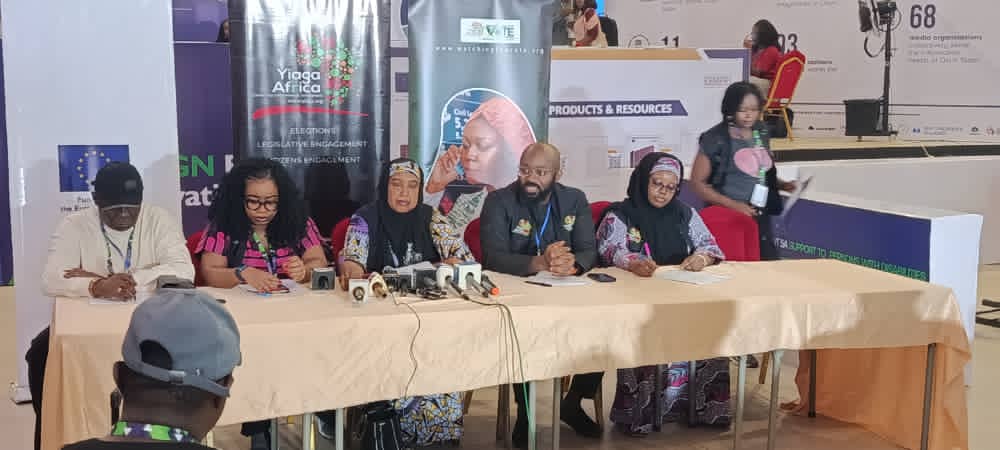
In a pre-election assessment released on Thursday, the election observation group said the August 15 governorship election is more than a contest for political power in Osun State, describing it as an important indicator of how prepared the Independent National Electoral Commission (INEC), security agencies and political actors are for the country’s next nationwide elections.
The organisation noted that the election would provide one of the first major tests of key reforms introduced under the Electoral Act 2026, including the use of downloadable Permanent Voter Cards and the electronic management and validation of polling-unit results.

According to Yiaga Africa, although INEC has completed most of its preparatory activities, the credibility of the election will ultimately depend on how effectively the commission manages logistics, technology and election-day operations.
“Readiness must be judged by performance,” the organisation stated.
INEC said the election will be conducted across 3,763 polling units in the state’s 30 local government areas, with 4,427 Bimodal Voter Accreditation System devices deployed for the exercise.
A total of 2,339,233 registered voters are expected to participate in the election, while 15 political parties have fielded candidates.
However, Yiaga Africa expressed concern over the limited participation of women and persons with disabilities, noting that only one female candidate is participating in the race, while none of the candidates publicly identified as a person with a disability.
The organisation also raised concerns over recent security developments in the state, warning that election-related violence has shifted from political rivalries and campaign clashes to direct attacks on electoral activities.
It specifically cited the attack on a PVC collection centre in Odo-Otin Local Government Area, politically motivated violence in Osogbo and disputes involving transport unions as developments that have heightened tensions ahead of the election.
Yiaga Africa further condemned what it described as the increasing use of inflammatory rhetoric and hate speech by political actors.
According to the organisation, such statements could worsen political tensions, encourage violence and further weaken public trust in the electoral process.
It urged security agencies to investigate and prosecute cases of electoral violence, threats and hate speech without political interference.
Another major concern identified in the report was the performance of the BVAS during INEC’s mock accreditation exercise.
The organisation disclosed that some devices experienced temporary difficulties in recognising fingerprints, facial features and older voter records.
Although INEC attributed the problem to compatibility issues involving older voter data, Yiaga Africa warned that unresolved technical failures could lead to voter disenfranchisement, delays and disputes at polling units.
The election observer group also expressed concern over the last-minute inclusion of the Social Democratic Party candidate, Dr. Francis Olugbenga Ajala, and his running mate, Faseke Babajimi Oladipo, following a Federal High Court ruling.
According to the report, the court’s decision compelled INEC to reprint ballot papers and result sheets, compressing the time available for the distribution of sensitive election materials.
Yiaga Africa warned that late judicial interventions could increase the risk of logistical failures and delayed commencement of voting.
The report also highlighted voter inducement as a significant threat to the integrity of the election.
The organisation said it documented the distribution of money and gift items by political actors, adding that although some of the distributions were presented as social interventions, their timing raised concerns about attempts to influence voters.
It also observed that voter education programmes remain uneven across the state.
While voter awareness campaigns have increased since July 1, the organisation noted that women-focused programmes were observed in only two local government areas, while youth-focused initiatives were recorded in three.
Yiaga Africa warned that persistent violence, political tension and growing distrust in the electoral process could negatively affect voter turnout.
The organisation called on INEC to address all outstanding technical challenges associated with election technology and activate contingency plans to avoid delays caused by the late arrival of revised election materials.
It also urged security agencies to maintain neutrality and professionalism throughout the election while respecting the rights of voters, journalists and election observers.
Political parties and their supporters were advised to abide by the terms of the peace accord, avoid inflammatory rhetoric and refrain from vote-buying.
As part of its election observation activities, Yiaga Africa said it would deploy 300 stationary observers and 32 mobile observers across all 30 local government areas in the state.
The organisation said it would also deploy its Process and Results Verification for Transparency methodology and the Election Result Analysis Dashboard 2.0 to independently verify election results and monitor the performance of INEC’s electronic results transmission system.
Yiaga Africa described the Osun governorship election as a defining moment for Nigeria’s electoral system.
“As the last major election before the 2027 general election, the Osun governorship election represents a crucial opportunity to strengthen public confidence in the electoral process,” the organisation stated.