



Digital advice is helping farmers sell more, but higher yields remain elusive.
Digital agriculture is often promoted as a way to close the information gap facing smallholder farmers. Through mobile phones, farmers can receive advice, check prices, connect with buyers and learn about better production practices. But evidence from a Nigerian digital advisory service suggests that the gains may be more immediate in the marketplace than on the farm itself. That distinction matters as governments, development organisations and agritech companies invest in platforms intended to transform agriculture.
Research highlighted by the International Food Policy Research Institute (IFPRI) on November 4 examined Crop2Cash, a Nigerian digital agricultural advisory platform used by farmers in Kaduna, Jigawa and Niger states. The study found that users recorded an average crop sales value about ₦161,520 higher than comparable non-users. The gains were associated mainly with marketing, price information, post-harvest practices and market connections, rather than a measurable increase in crop productivity.

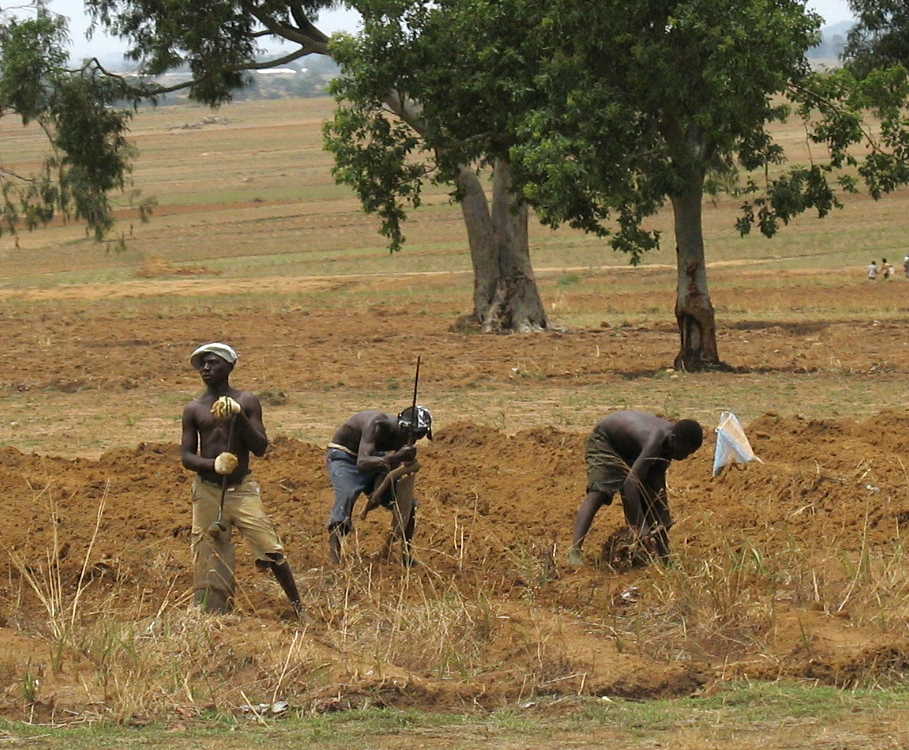
Better market information can improve earnings
The finding points to a part of farming that technology discussions sometimes overlook. A farmer’s income depends not only on how much is harvested, but also on when produce is sold, the price received, the availability of buyers and the amount lost after harvest. Information about market prices and access to buyers can help farmers make better selling decisions, reduce avoidable losses and improve the value of what they already produce.
That does not mean the platform created the same benefit for every farmer or that the reported difference should be treated as a guaranteed increase in household income. The study’s result is an average comparison, and outcomes can vary with crop, location, market conditions and farmers’ ability to act on the information. But it does show why agricultural technology should be assessed against the particular problem it is designed to solve.
Why higher sales did not mean higher yields
The research did not find a statistically significant average improvement in crop productivity among platform users. It also found no significant average effect on adoption of the 19 sustainable agricultural practices promoted through the service. This is an important qualification to claims that digital advisory platforms automatically make farms more productive.
Receiving advice is not the same as having the means to follow it. A farmer may learn about improved seed, fertiliser application or pest management but still lack the money to buy inputs, access to irrigation, labour, equipment or timely extension support. Advice can reduce an information barrier; it cannot by itself remove the financial and physical constraints that determine what happens in the field.
This distinction is especially important in Nigeria, where farmers face high input costs, limited irrigation, climate risks and weak rural infrastructure. The FAO’s overview of the country’s agriculture sector identifies inadequate finance, limited irrigation, post-harvest losses and weak access to inputs and markets among the challenges affecting production. Digital platforms can help connect parts of this system, but they cannot substitute for the services and investment farmers need.
Who is being left out?
The study also raises questions about inclusion. Uptake and benefits were not evenly distributed, with women less likely to use the platform. That matters because a digital service can widen an existing gap if access depends on phone ownership, literacy, connectivity, control over household resources or the freedom to travel to markets and training.
Designing for inclusion requires more than making an application available. Providers need to understand who controls the phone, which languages farmers use, whether advice is accessible to people with limited literacy and whether women can act on recommendations. Partnerships with extension workers, farmer groups and local organisations may help bridge some of these gaps.
A better test for Nigeria’s agritech investment
The Crop2Cash findings should not be read as evidence that digital agriculture has failed. They show that its impact depends on the problem being addressed and on the wider conditions farmers face. A platform that improves market access can create value even when yields do not change. But if the ambition is to raise productivity, digital advice must be connected to affordable inputs, finance, irrigation, extension and reliable buyers.
For policymakers and investors, evaluation should therefore separate outcomes: whether farmers receive and use information, whether they adopt recommended practices, whether yields change, whether post-harvest losses fall and whether net income rises after costs. It should also report who benefits by gender, age, location and farm size. Counting downloads, registered users or messages sent cannot show whether farmers are better off.
Harbinger has previously examined the digital divide in Nigerian agritech and the role of digital farming in farmers’ earnings. The evidence reinforces a practical point: technology is useful when it solves a real constraint, but it cannot replace the investment and institutions required to make farming productive.
Nigeria’s agritech sector should be judged not by how sophisticated its platforms appear, but by what farmers can do differently because of them. Helping farmers find better prices is valuable. Helping them produce more, lose less and earn reliably requires a broader system of support — and that is where the next phase of agricultural innovation must prove itself.