


By Boluwatife Adedokun
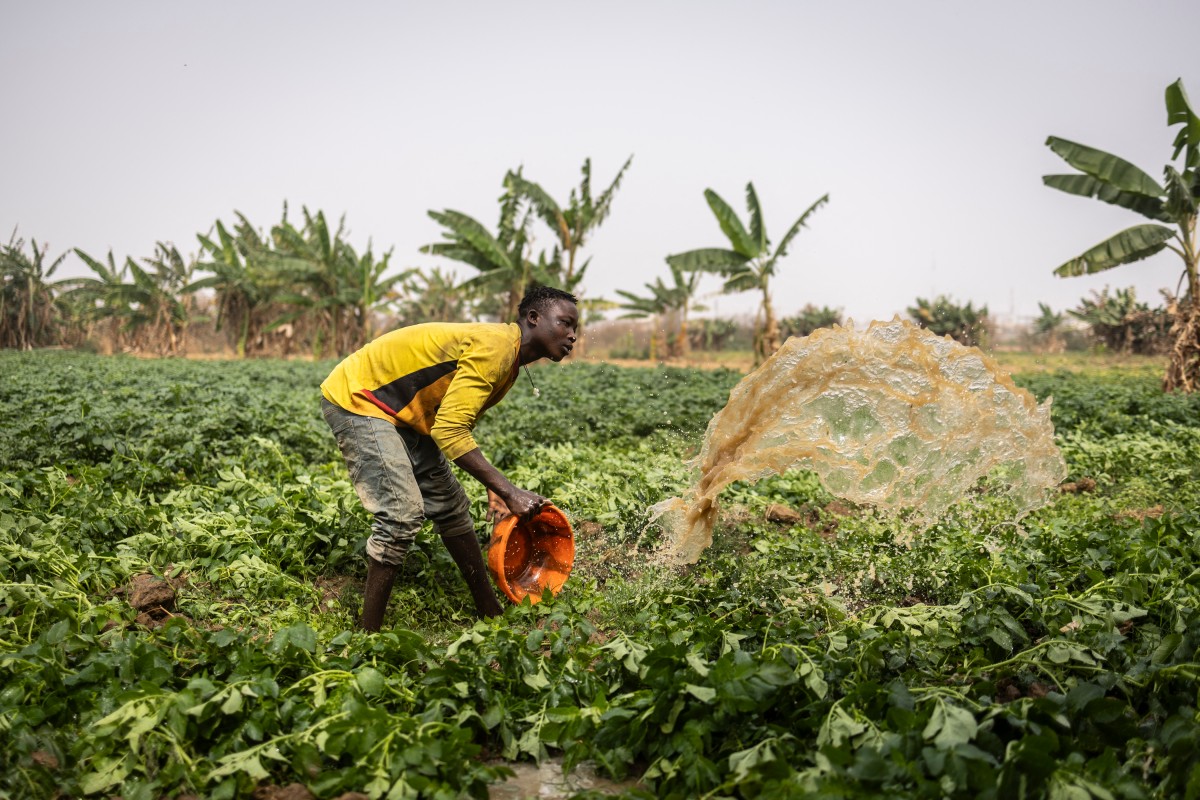
A bigger harvest does not always translate into a bigger income for Nigerian farmers. For many smallholder farmers, increasing production can come with higher spending on seeds, fertiliser, labour, transportation and other inputs, leaving them with little improvement in their earnings after the harvest is sold.
Nigeria’s agricultural sector remains central to employment and food production, but low productivity, limited access to quality inputs, climate shocks and weak connections to markets continue to constrain the ability of smallholder farmers to build profitable businesses.

The World Bank’s $500 million Sustainable Agricultural Value-Chains for Growth project, approved in 2026, specifically identifies these constraints and seeks to strengthen agricultural value chains through aggregation, post-harvest handling, agro-processing and improved market access.
The mathematics of a harvest
Consider a smallholder maize farmer who decides to cultivate a larger area in an attempt to increase earnings. Expanding the farm may increase the quantity harvested, but it also increases expenditure on land preparation, seeds, fertiliser, chemicals, labour and transportation.
The distinction between productivity and profitability is particularly important in an environment where farmers face multiple costs before their produce reaches consumers.
The rising cost of production
The cost of farming begins long before a farmer takes produce to market. Seeds, fertiliser, herbicides, pesticides, land preparation, labour, machinery and transportation all require money, while farmers who borrow to finance production must also consider the cost of repayment. For a smallholder operating on a narrow margin, an increase in any major input can significantly change the economics of production.
The consequence is that farmers can find themselves trapped between rising production costs and uncertain selling prices. If they spend more to produce a crop but are forced to sell at a price that does not adequately cover those expenses, the additional production does little to improve their financial position.
When higher food prices do not mean higher farmer income
There is another contradiction within Nigeria’s food system: consumers can experience rising food prices while farmers remain dissatisfied with what they receive for their produce. The price paid by a consumer in an urban market reflects several stages between the farm and the final point of sale, including transportation, aggregation, storage, handling, processing and trading.
This gap highlights the importance of market access. A farmer who has only one or two buyers available at harvest has limited bargaining power, particularly when the produce is perishable and cannot be stored for long.
The World Bank’s current agricultural value-chain programme for Nigeria recognises the importance of connecting producer groups with agribusiness off-takers and strengthening structured aggregation so that smallholder farmers can participate more effectively in competitive markets.
Post-harvest losses can erase months of work
Producing food is only half of the agricultural equation. Keeping that food in good condition until it reaches the buyer is another challenge, particularly for farmers producing perishable crops. When storage facilities are inadequate, farmers may be forced to sell immediately after harvest, often at a time when large volumes of the same commodity are entering the market. This can weaken prices and leave farmers with little room to negotiate, especially when they need immediate cash to repay loans or finance the next production cycle.
Storage therefore has an economic function beyond preventing food waste. It can give farmers time to wait for better market conditions, organise their produce and negotiate with buyers instead of accepting the first available offer. The same principle applies to roads and transportation. The World Bank’s Rural Access Agricultural Marketing Project Scale-Up is designed to rehabilitate, upgrade and maintain 6,500 kilometres of rural roads in Nigeria, with the stated objective of improving access to agricultural markets, increasing traded agricultural products and farm-gate prices, reducing harvest losses and improving household incomes.
The farmer’s weak bargaining position
Smallholder farmers often operate individually while buyers and processors operate at much larger scales. A farmer with a few bags of maize, for example, may have little influence over the price offered by a trader, particularly when the farmer lacks storage and needs to sell quickly. Hundreds of farmers who organise their produce through cooperatives or producer groups, however, can potentially achieve greater bargaining power by aggregating their harvest and approaching larger buyers as a group.
This is one reason the Nigeria Sustainable Agricultural Value-Chains for Growth project places emphasis on structured aggregation and market linkages between producer collectives and agribusiness off-takers.
More land is not always the answer
There is a tendency to assume that Nigerian farmers can escape poverty by cultivating more land. But expanding farm size without improving access to technology, finance, infrastructure and markets can increase exposure to risk. More hectares require more inputs, more labour and more capital, while larger harvests require stronger market connections. If farmers produce more than they can profitably sell, expansion can increase financial pressure instead of reducing poverty.
For smallholder farmers, the more useful question may therefore be how to earn more from the land they already cultivate. Better seeds, improved soil management, irrigation, mechanisation, storage, processing, crop diversification and stronger connections to buyers can all contribute to this.
Processing could change the economics
One of the major opportunities in Nigerian agriculture lies beyond the farm gate. Raw agricultural commodities often have considerably more economic potential when they are processed into products that can be stored, transported and sold to wider markets. Cassava can be processed into flour, starch and other industrial products; tomatoes can be converted into paste; cocoa can move beyond raw beans into processed products; while oil palm can generate value through several stages of processing.
However, processing cannot succeed in isolation. Processors require reliable supplies of raw materials, farmers need dependable markets, electricity must be available, transportation must be affordable and producers must be able to meet quality standards. This is why value-chain development is more complicated than simply constructing processing facilities. The World Bank’s AGROW project combines support for smallholder productivity with aggregation, post-harvest handling, value addition and market access because these parts of the agricultural system are interconnected.
Climate change is making profitability harder
For Nigerian farmers, profitability is also increasingly connected to climate risks. Erratic rainfall, flooding, prolonged dry spells, extreme heat and changing pest patterns can affect both production and expenditure. A farmer whose crop is damaged by flooding may lose the money invested in seeds, fertiliser and labour while still having to meet existing financial obligations. Another farmer facing drought may have to spend more on irrigation or risk losing the crop altogether.
This makes climate adaptation an economic issue as much as an environmental one. Water conservation, improved crop varieties, agroforestry, soil management, irrigation and better access to weather information can help farmers manage some of these risks, but the solutions must be affordable and practical for smallholders.
A climate-smart agricultural intervention that farmers cannot afford or maintain will have limited impact, regardless of how effective the technology may be in controlled conditions.
Technology must solve an economic problem
Agricultural technology is increasingly presented as a solution to low productivity, but technology should not be judged simply by how sophisticated it appears. Its usefulness should be measured by whether it solves a real problem for farmers. Can a digital platform help a farmer locate a buyer? Can weather information help determine when to plant? Can precision technology reduce unnecessary use of fertiliser? Can solar-powered irrigation lower the cost of accessing water?
There is growing evidence that digital platforms can improve farmers’ access to information and markets. The World Bank’s work on digital agricultural platforms in West Africa found that such platforms can provide real-time information, facilitate market connections and improve access to financial services.
Government support must go beyond distribution
Government agricultural programmes frequently focus on the distribution of seedlings, fertiliser, equipment and other inputs. Such interventions can provide important support, particularly for farmers who would otherwise struggle to afford basic inputs. But the effectiveness of these programmes should not be judged solely by the number of farmers who received something.
If farmers receive improved seeds, did their yields increase and did their incomes improve? If tractors are provided, did farmers gain affordable access to mechanisation and reduce production costs? If loans are disbursed, did the financing help farmers develop profitable enterprises without creating unsustainable debt? These questions shift agricultural policy from measuring activities to measuring outcomes. The number of beneficiaries remains useful, but the number of farmers whose livelihoods actually improved is a more meaningful measure of success.
Rural roads are part of farm economics
The condition of rural roads is often treated as an infrastructure problem rather than an agricultural problem, but for farmers the two cannot be separated. A poor road can increase transportation costs, discourage buyers from travelling to farming communities and increase the time required to move perishable produce. A farmer may therefore have good seeds, fertiliser and a strong harvest but still lose income because the road connecting the farm to the market is inadequate.
Nigeria’s Rural Access Agricultural Marketing Project Scale-Up illustrates why infrastructure should be considered part of agricultural policy. The programme aims to improve 6,500 kilometres of rural roads and benefit about four million rural residents. According to the World Bank, better rural road access is expected to increase agricultural market access, traded volumes and farm-gate prices while reducing harvest losses.
The real agricultural target should be income
Nigeria’s food-security conversation often begins with production. How much maize can farmers produce? How much rice, cassava or soybeans can be harvested? How many hectares can be cultivated? These figures are important because Nigeria needs a reliable food supply, but they do not tell the entire story of agricultural development. The income generated by that production matters just as much.
A farming system that produces more food but leaves farmers with little income is not delivering its full economic potential. The objective should be to create conditions in which farmers can produce efficiently, reduce avoidable losses, negotiate better prices, add value to their commodities and retain a greater share of the value created along the agricultural chain.
From producing more to earning more
The central question for Nigeria’s agricultural sector should therefore move beyond how to produce more food. It should also ask how farmers can earn more from the food they already produce. That means looking closely at production costs, post-harvest losses, transportation, market information, storage, aggregation, processing and the bargaining power of farmers. It also means evaluating government agricultural programmes by their effect on farmers’ livelihoods rather than simply by the number of inputs distributed or people reached.