


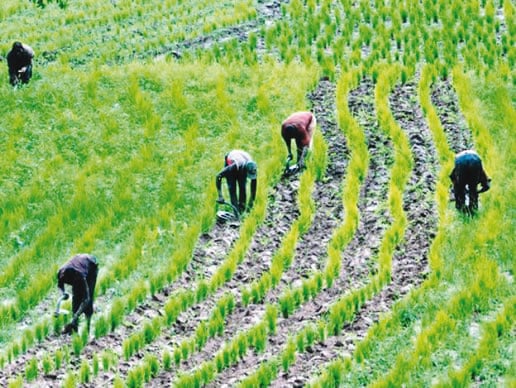
The Federal Government has unveiled a N1 billion reform of Nigeria’s agricultural education system, targeting improved food production, job creation, and broader economic growth.
The development was announced on March 27 through a post by the Presidency on X, pointing to a shift in how agriculture is taught across tertiary institutions.
Agricultural education covers the training of students in farming, agribusiness, and related sciences, including crop production, livestock management, soil science, and agricultural technology. The plan, according to the government, is to equip students with practical skills that can directly improve output and strengthen the country’s food system.

Related Posts:
- "Education Na scam": Illusion or Reality, Students…
- Agriculture Is Now a Data War : Is Nigeria Falling Behind?
- Why Many Nigerian Students Excel in Class but…
- The Antidote of 21st Century: Skills or Degree?
- Climate Change and Agriculture: A Call to Action for…
Powered by Contextual Related Posts
Minister of Education, Tunji Alausa, said the reform will introduce a more hands-on approach, with students expected to spend between 60 and 70 per cent of their training on practical activities across key agricultural areas.
He said the move would also deepen collaboration between the education and agriculture ministries, with the aim of producing graduates who can drive productivity and innovation in the sector.
The announcement follows earlier efforts by the government to reposition agricultural education. In October 2025, a broader reform plan was introduced in Abuja by the Federal Ministries of Education and Agriculture and Food Security to update outdated curricula and align them with modern farming practices.
At the time, Alausa raised concerns about declining interest among students, noting that many admission slots for agriculture-related courses remained unfilled.
“Agriculture is a major national priority, but enrollment in agricultural courses in higher institutions is dropping,” he said.
The latest investment comes as Nigeria continues to face pressure on its food system, with insecurity in parts of the country affecting farming activities and supply chains. Incidents such as herder-farmer clashes in the Middle Belt and insurgency in the North have disrupted production in recent years.
Alongside the education reform, the government has introduced financing measures to support the sector. Earlier this month, it approved a N250 billion facility for the Bank of Agriculture to provide credit to smallholder farmers at single-digit interest rates.
In September 2025, the bank secured a $1 billion facility in partnership with the African Export-Import Bank to strengthen the agricultural value chain. This was followed by a $200 million livelihood support fund in October, in collaboration with the International Organization for Migration, targeting displaced persons and migrants.
Taken together, these steps point to a broader effort to improve productivity, strengthen food supply, and position agriculture as a key driver of the economy.