


By Boluwatife Adedokun
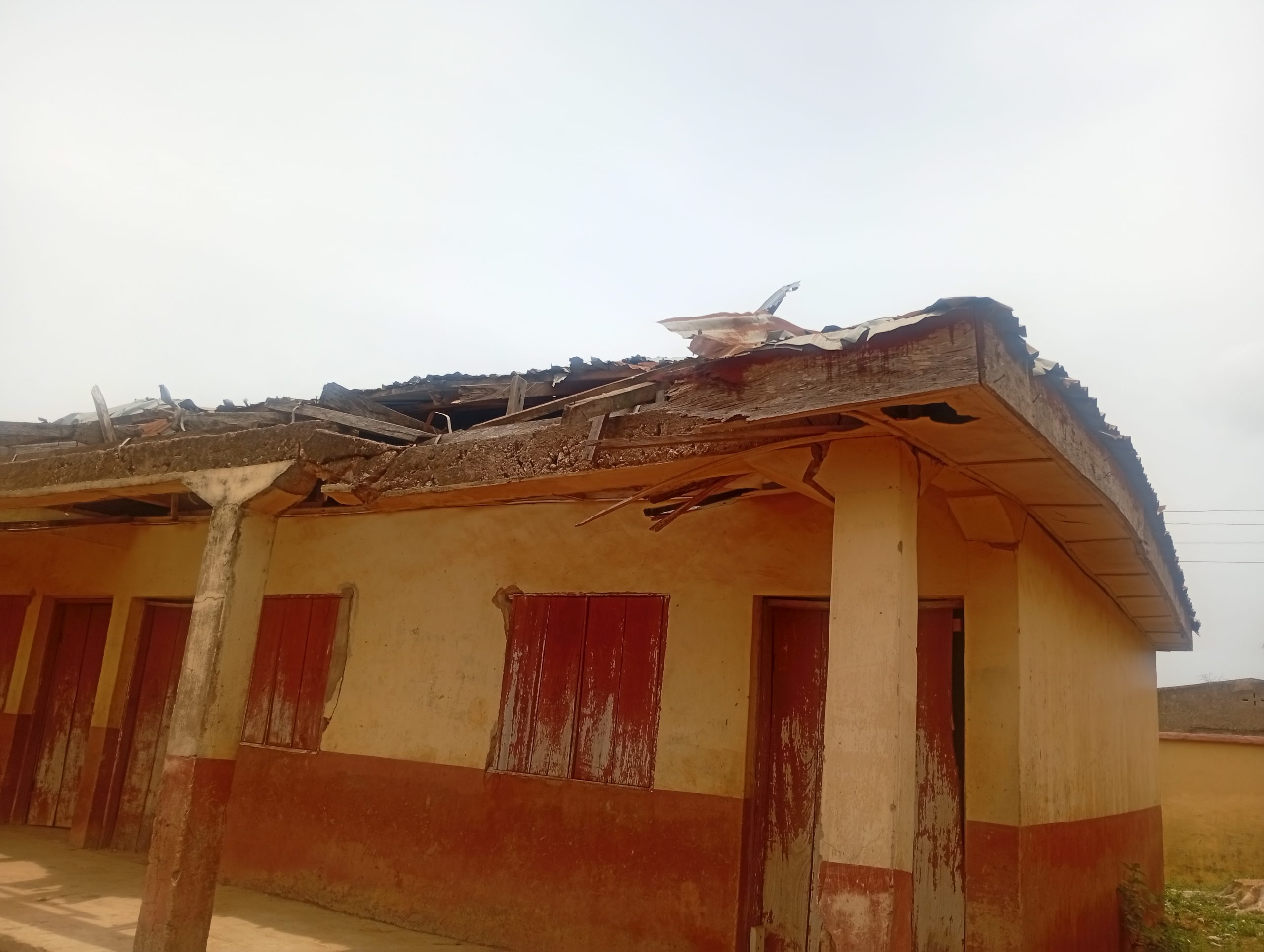
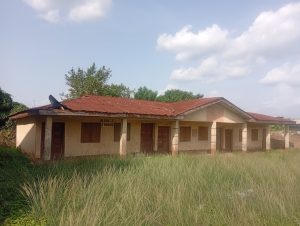
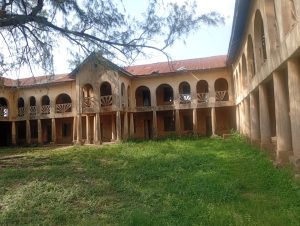
At St.Michael Grammar School in Gbongan, Osun state, aging classroom blocks still stand with weak roofs, faded walls, and visible signs of years of neglect.
Some of the windows are broken, parts of the structures appear worn, and sections of the walls are beginning to wear out, while school officials and parents spoke quietly about structures they feared could deteriorate further if left unattended.

Yet these schools are among public institutions captured in Osun State’s 2025 education budget and implementation records, documents that reflected millions of naira allocated and partially executed for school infrastructure projects across the state.
“The roof is leaking, we are just managing,” a Primary Six pupil said. “They didn’t repair anything.”
Just a few meters away, another parent shook her head repeatedly as she discussed the state of the school.
“We parents are the ones contributing money for some of these buildings; they merge two classes together. A lot of buildings need reconstruction.” Najeem Mariam said
For many parents and students in Osun State’s public schools, deteriorating classrooms, leaking roofs, and unsafe learning environments have become normal realities.
However, official records reviewed tell a different story.
The documents show that millions of naira were allocated and partially executed for classroom construction and renovation projects across several public schools in the state in 2025.
However, visits to public schools across Osogbo in Osogbo Local Government Area, Ikirun in Ifelodun Local Government Area, Iragbiji in Boripe Local Government Area, and Gbongan in Ayedaade Local Government Area revealed troubling gaps between education spending records and the daily realities faced by students
Between Budget Figures and School Conditions
In 2025, the Osun State Government allocated about ₦27.5 billion to the education sector, including the Ministry of Education, SUBEB, and related education agencies. The figure was highlighted as part of efforts to improve learning conditions and expand educational infrastructure across the state.
The allocation was reflected across multiple budget heads involving classroom construction, renovation, fencing, boreholes, office rehabilitation, and other school infrastructure projects.
Budget performance records reviewed by this reporter showed that several projects had already recorded percentages and financial performance figures under the state’s 2025 implementation reports.
Among the schools listed in the documents were AUD Primary School A, Oke-Baale, Osogbo; Baptist High School, Iragbiji; schools in Ikirun, and multiple schools in Gbongan.
A school for special needs in Osogbo carried similar allocations of about ₦35 million each.
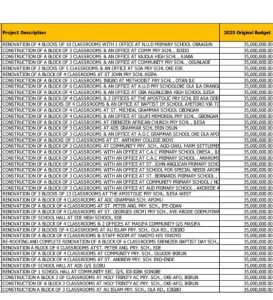
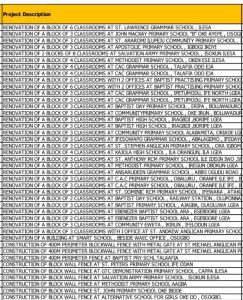
But physical visits to the schools revealed conditions that sharply contrasted with the impression created by the records.
When this reporter got to AUD Primary School A, Oke-Baale, Osogbo, no visible evidence of any recent large-scale renovation matching the figures in the documents could be immediately identified.
Some classroom roofs still appeared weak and old, while portions of the structures showed visible deterioration.
At Baptist High School, Iragbiji, students and parents described similar conditions.
“There are no traces of new classes here at all,” Jelili Oyelami, a student, said while pointing toward aging classroom blocks.
“It’s been a while, and we have some buildings that are very bad. Some don’t have windows, even though we manage it.”
Parents also complained about leaking roofs inside parts of the school.
“The roof used to leak sometimes, especially in the hall,” Ibrahim Idaayah, a parent, said. “Some students used to complain.”
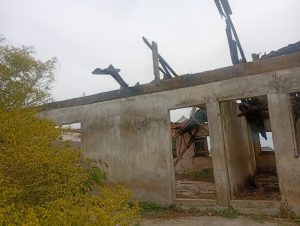
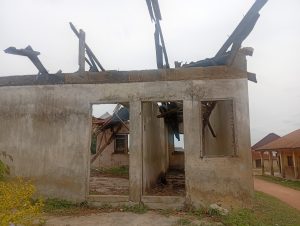
Also at Community Primary School, Ikirun, the school authorities said the school needed most was renovation, not necessarily additional classroom blocks.
“Some buildings just need renovation,” the senior staff said. “We have enough classes, and we are not seeing any signs that they are renovating it soon.”
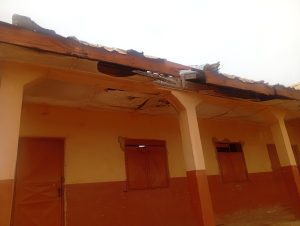
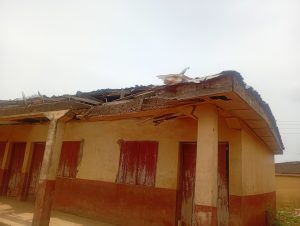
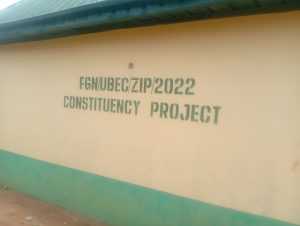
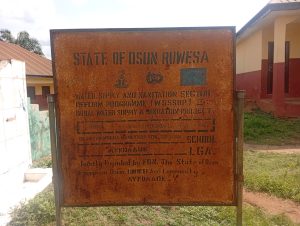
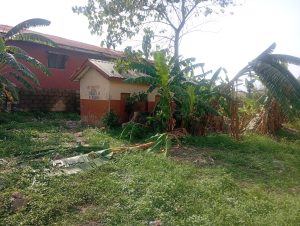
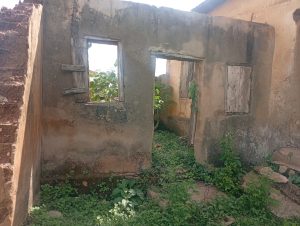
The situation at Olufi Memorial Primary School, Gbongan, appeared even worse due to environmental conditions affecting the structures.
“It’s really affecting us,” the senior staff explained
“It is watery land, and that’s the challenge we are facing. There’s water that we even called an engineer for, but the wall and down parts need irons, and there’s no fence in the school.”
“There are some buildings that will soon collapse, and no new class has been built recently. We just need reconstruction, not that we need new classes, but we are not seeing signs that the government will do it.”
A Familiar Story Across Nigeria
The condition of public schools in Osun shows a wider education infrastructure crisis across Nigeria.
According to the UNICEF Nigeria Education Programme, millions of Nigerian children continue learning in poor and unsafe environments despite repeated government interventions and budgetary allocations.
UNICEF notes that Nigeria has one of the highest numbers of out-of-school children globally, with poor learning infrastructure contributing significantly to declining educational outcomes.
The organisation also warned that deteriorating classrooms, overcrowding, and unsafe learning conditions continue to affect pupils in many public schools across the country.
In a separate report, the Universal Basic Education Commission (UBEC) disclosed that 40 percent of classrooms in Nigeria’s basic education sector are in poor condition, while 73 percent of public junior secondary school pupils lack adequate furniture.
The challenge has persisted despite repeated interventions by UBEC and state governments.
In April 2026, UBEC announced the release of additional funds for school infrastructure rehabilitation projects nationwide, including classrooms, furniture, and sanitation facilities.
The commission had earlier disclosed that it constructed over 4,900 classrooms nationwide in partnership with state governments and SUBEBs.
Years earlier, Osun State itself launched the “O-Schools” initiative under former governor Rauf Aregbesola, promising a major overhaul of public school infrastructure across the state. According to the official Osun State government website, the programme aimed to replace dilapidated school structures with modern facilities.
But more than a decade later, many schools visited during this investigation still showed signs of aging infrastructure and poor maintenance.
We sometimes contribute to get something done in the school, not the government – Parents
For many parents, the argument over budget terminology means little compared to what they confront daily.
At Michael Grammar School, one parent said the school had deteriorated badly despite years of public promises around education development.
“The school is not good,” the parent said. “I finished in this school, but it hasn’t really improved.”
“Most times, they tell us to contribute, and we must contribute. It was even better when I was in school than now. The government is not doing anything there.”
Another student, Sikirat Razaq, described the classrooms simply as “bad.”
“It’s been ages since they repaired it,” she said.
When Budget Figures Meet Physical Reality
The Osun budget performance documents reviewed contained categories such as 2025 Original Budget, 2025 Q3 Performance, and Performance to Date.
Several school projects reflected implementation figures and percentages.
Yet in many schools visited, the only visibly newer structures identified by school authorities or residents were linked to projects executed years earlier.
At the School for Special Needs in Osogbo, officials pointed to structures connected to 2024 interventions rather than fresh 2025 projects reflected in current records.
School for special needs, Osogbo
During the visit, some officials appeared reluctant to discuss the projects openly.
“We have our Oga at SUBEB; they are the ones that will answer you,” one official said cautiously. “Even my students can’t talk to you as a journalist because this section is political.”
The reluctance reflected growing sensitivity around questions involving education spending and project implementation in the state.
Expert React
Education advocate Sam Awo said Osun’s education sector has continued to suffer from poor infrastructure maintenance and unfulfilled promises.
“Many secondary schools built during the administration of Ogbeni Rauf Aregbesola have deteriorated due to poor maintenance,” he said.
According to him, several tertiary institutions across the state also continue to struggle with infrastructure shortages, poor roads, inadequate facilities, and insufficient staffing.
He called for stronger monitoring systems and accountability mechanisms involving government agencies, school authorities, unions, and civil society groups to ensure education funds translate into visible improvements.
If They Said It Has Been Done, It Has Been Done
When contacted, the Permanent Secretary of the Osun State Ministry of Education, Murtala Adekilekun Kehinde Jimoh, defended the records and challenged the reporter’s interpretation of the budget documents.
“If they said it has been done, it has been done,” he said.
“I don’t understand where you said you went to, that they haven’t done it, or that you don’t understand what the budget is. The budget is just planning, not that the actual amount has been released.”
However, when informed that some projects reflected implementation percentages in the budget performance report, he insisted those figures represented executed projects.
“If there’s a percentage in the performance budget, that means it has been constructed, which I’m sure,” he added.
“I can even go there tomorrow, but I’m sure you don’t know what you are saying.”
The explanation appeared to contradict earlier claims, suggesting that budget entries did not necessarily indicate actual releases or execution.
Mallam Olawale Rasheed, spokesperson to Governor Ademola Adeleke, said he could not speak extensively on the issue.
However, he acknowledged that if funds had truly been released as reflected in the documents, the projects should ordinarily be visible physically.
Meanwhile, during an interview with Western Spring TV, Alesinloye Kamorudeen Abiodun, Special Adviser to the Chairman of SUBEB, claimed that the board had constructed hundreds of classrooms across the state.
“We have built different schools in Osun, not only hundreds, but two hundred new classrooms,” he said.
But when asked to identify specific schools, he struggled to mention names immediately.
“We built a school in my town, Ilaje, but I could not remember the name,” he added.
The investigation found that the issue extends beyond mere budget proposals. While government officials argued that budgets are planning documents, the budget performance records reviewed by this reporter included implementation percentages and performance figures indicating that several school projects had progressed beyond the planning stage. Despite these, physical visits to many of the schools revealed little or no visible evidence of projects that officials claimed had been executed.
The contradiction raises serious concerns about corruption and accountability in the management of public education funds in Osun State, including the possibility of inflated project claims, poor execution, diversion of funds, or manipulation of government performance reports.
In many of the schools visited, parents and school authorities said they still relied on personal contributions to fix deteriorating structures despite the billions allocated to education infrastructure.
This report was produced by BoNews with support from the Civic Media Lab as part of its Grassroot News reporting Project (GNP) 3.0