


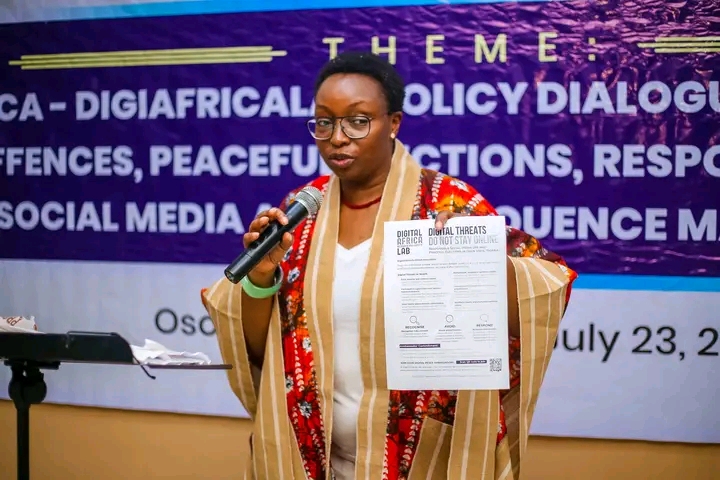
The Digital Africa Research and Safety Lab (DigiAfricaLab) has introduced a public education framework aimed at tackling misinformation, digital threats and harmful online content ahead of the August 15 Osun State governorship election.
The organisation unveiled the “Recognise. Avoid. Respond.” framework during the PAACA-DigiAfricaLab Policy Dialogue on Electoral Offences, Peaceful Elections, Responsible Use of Social Media and Consequence Management, held in Osogbo in collaboration with the Peering Advocacy and Advancement Centre in Africa (PAACA).
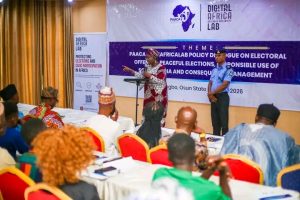



According to a statement issued by DigiAfricaLab on Saturday, the dialogue formed part of efforts to promote peaceful participation, responsible digital conduct and stakeholder preparedness before, during and after the governorship election.
The event brought together stakeholders from the Independent National Electoral Commission (INEC), security agencies, the National Orientation Agency (NOA), traditional and religious institutions, civil society organisations, youth groups, academia, media organisations and digital content creators.
The statement said DigiAfricaLab designed and facilitated the session on responsible social media use and digital threats, where it introduced the “Recognise. Avoid. Respond.” framework, the “Digital Threats Do Not Stay Online” public education guide, a practical scenario exercise and the Osun Digital Peace Ambassadors initiative.
Speaking at the dialogue, INEC Resident Electoral Commissioner in Osun State, Mrs. Oluwatoyin Babalola, described the forthcoming governorship election as a significant milestone and stressed that peaceful elections require tolerance, dialogue, mutual respect and accountability.
She urged political actors and citizens to reject violence, misinformation, disinformation, vote buying, voter intimidation and other forms of electoral malpractice.
Babalola also noted that while social media has become an important tool for civic engagement and information sharing, it can also be exploited to spread false information, manipulate public opinion and undermine confidence in electoral institutions.
She encouraged civil society organisations, including DigiAfricaLab, to sustain voter education, policy advocacy, election observation and digital literacy initiatives.
Also speaking, Osun State Director of the National Orientation Agency, Mr. Adebiyi Stephen Adefarasin, urged residents to verify information before sharing it online and use social media platforms to promote peace and credible democratic participation.
The Osun State Police Command, represented by the Police Public Relations Officer, DSP Abiodun Ojelabi, reaffirmed the command’s commitment to a peaceful, secure and credible election, stressing that successful elections require collaboration among electoral authorities, security agencies, political parties, the media and civil society.
The statement added that participants examined how online activities could influence offline election risks, with DigiAfricaLab explaining that digital threats extend beyond misinformation to include impersonation, online voter intimidation, identity-based incitement, doxxing, coordinated manipulation, manipulated media, false security alerts and premature election result claims.
It also cautioned that weak platform moderation, algorithm-driven amplification of sensational content and limited understanding of local political contexts by technology companies could worsen election-related digital risks.
DigiAfricaLab, however, emphasised that responsible social media use should not be mistaken for censorship, maintaining that citizens have the right to criticise political leaders, question institutions, report concerns and demand accountability, provided they do not spread harmful or misleading content.
As part of the engagement, participants took part in a practical simulation on how stakeholders should respond to unverified reports of violence circulating on election morning. The exercise highlighted the need for prompt verification, calm communication, evidence preservation and responsible reporting.
During the exercise, DSP Ojelabi explained that the police would verify such claims by contacting officers deployed to the affected locations before issuing official public updates.
The organisation also distributed its one-page public education guide titled Digital Threats Do Not Stay Online and invited participants to join the Osun Digital Peace Ambassadors, a non-partisan network established to promote responsible online engagement and peaceful election messaging.
Speaking on the initiative, Founder and Executive Director of DigiAfricaLab, Rosemary Ajayi, said responsible social media use does not prevent citizens from holding leaders accountable.
“Responsible social media use is not silence. Citizens can criticise, question, report, observe and demand accountability. But we must not mislead, intimidate, incite, impersonate, dox or amplify harmful claims that may put people, communities or the electoral process at risk,” she said.
Ajayi added that digital threats often transcend the online space and could influence public confidence and participation in elections.
“A single message, image, video, false result claim or impersonation account can create fear, suppress participation, inflame tension or damage trust. Our message to stakeholders and citizens is simple: recognise the risk, avoid amplification and respond responsibly,” she said.
According to the statement, the initiative is supported by Luminate as part of DigiAfricaLab’s broader efforts to strengthen digital safety, platform accountability and election integrity across Africa. It added that lessons from the Osun engagement would inform the organisation’s wider election preparedness programmes and the expansion of its Digital Peace Ambassadors network across Nigeria.