


By Boluwatife Adedokun
Food inflation in Nigeria rose to 12.12 percent year-on-year in February 2026, signalling renewed pressure on household food costs, according to the latest Consumer Price Index report released by the National Bureau of Statistics.
The figure represents an increase from 8.89 percent recorded in January, pushing food inflation back into double-digit territory after a brief slowdown, as earlier reported by The Punch.

Related Posts:
- 20 Former Nigerian Governors that May Likely Become…
- Rising Prices, Sinking Hopes: Ondo Traders, Students…
- Gas Price Crisis Takes Toll on AAUA Students
- Where Did the Money Go? Osun Spent Just 34% of…
- People No Longer Take Bikes; They Trek Instead —…
- Nigeria's Rising Costs Threaten Livelihoods of Osun…
Powered by Contextual Related Posts
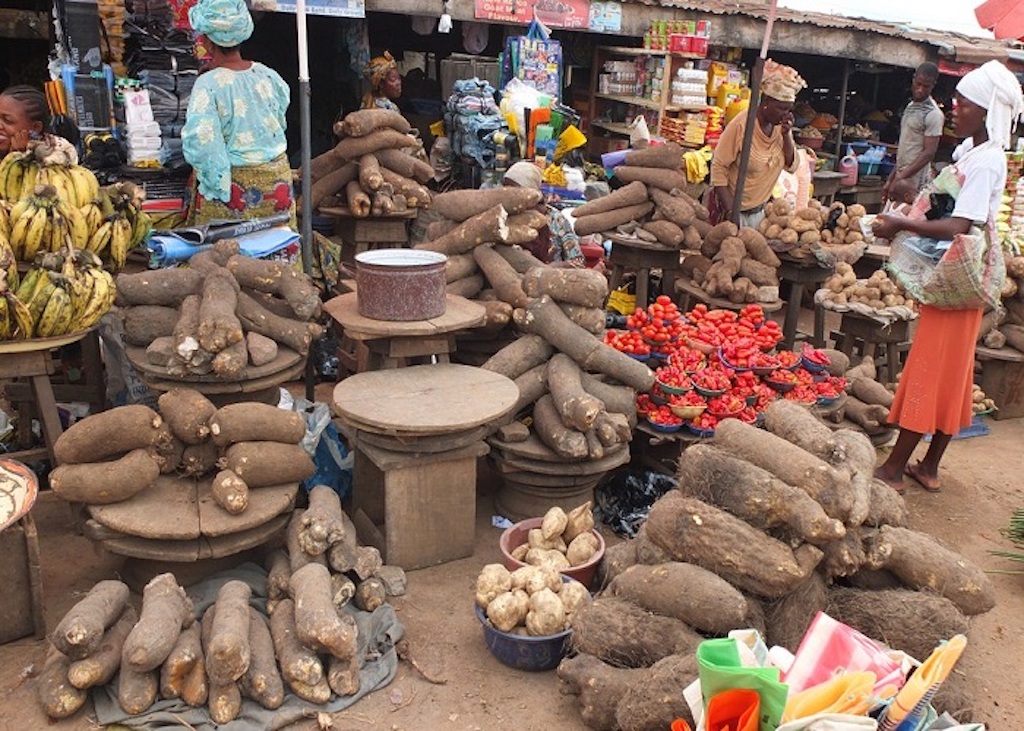
The statistics office attributed the rise to increasing prices of key food items, stating that the surge was “attributed to the rate of increase in the average prices of beans, cassava tuber, crayfish, millet flour, yam flour, and other staples.”
On a month-on-month basis, food prices rose by 4.69 percent in February, reflecting renewed short-term pressures across food markets.
Despite the increase from January, the NBS noted that food inflation remains significantly lower compared to the same period last year.
“The food inflation rate in February 2026 was 12.12 percent on a year-on-year basis. This was 14.86 percentage points lower compared to the rate recorded in February 2025 (26.98 percent),” the bureau stated.
Further analysis showed that the average annual rate of food inflation for the twelve months ending February 2026 stood at 19.08 percent, down from 37.40 percent recorded in February 2025.
“The average annual rate of food inflation… was 19.08 percent, which was 18.31 percentage points lower compared with the average annual rate recorded in February 2025,” the report added.
At the state level, Kogi recorded the highest food inflation rate at 26.91 percent, followed by Adamawa (23.12 percent) and Benue (21.89 percent).
In contrast, Katsina (5.09 percent), Bauchi (7.09 percent), and Imo (7.65 percent) recorded the slowest increases in food prices.
Meanwhile, Nigeria’s headline inflation rate eased slightly to 15.06 percent in February, down from 15.10 percent in January.
“In February 2026, the headline inflation rate eased to 15.06 percent, down from 15.10 percent in January 2026,” the NBS said, noting a marginal moderation in overall price increases.
However, experts have expressed concern over the rebound in food inflation.
The Chief Executive Officer of the Centre for the Promotion of Private Enterprise, Dr. Muda Yusuf, described the development as troubling.
“If food inflation has jumped from single digits to about 12 percent, then that should be concerning,” Yusuf said. “That means we still have some challenges to deal with, especially insecurity and logistics costs.”
Similarly, the President of the Association of Small Business Owners of Nigeria, Dr. Femi Egbesola, said the slight decline in headline inflation offers little relief to businesses and households.
“For us as SMEs, I don’t think it is a call for celebration yet because the reduction is still very marginal,” he said. “The major drivers of inflation, which are food and energy, are still high.”
Egbesola added that the current figures have not translated into real relief for Nigerians.
“At the moment, this is not reflecting in businesses, this is not reflecting in the livelihood of the common man, and this is not reflecting in the prices of goods and services,” he said.
Farmers have also warned that rising input costs could further worsen food prices, with some considering scaling down production in the coming planting season.
The President of the All Farmers Association of Nigeria, Mohammed Magaji, cautioned that the situation could have serious implications for food supply.
“It’s very bad in the sense that farmers may not go to farm again. Many are already saying they will wait and buy instead,” he said. “That has a lot of implications.”
Analysts have also warned that global factors, including rising energy costs and tensions in the Middle East, could further push inflation higher in the coming months.