


By Boluwatife Adedokun
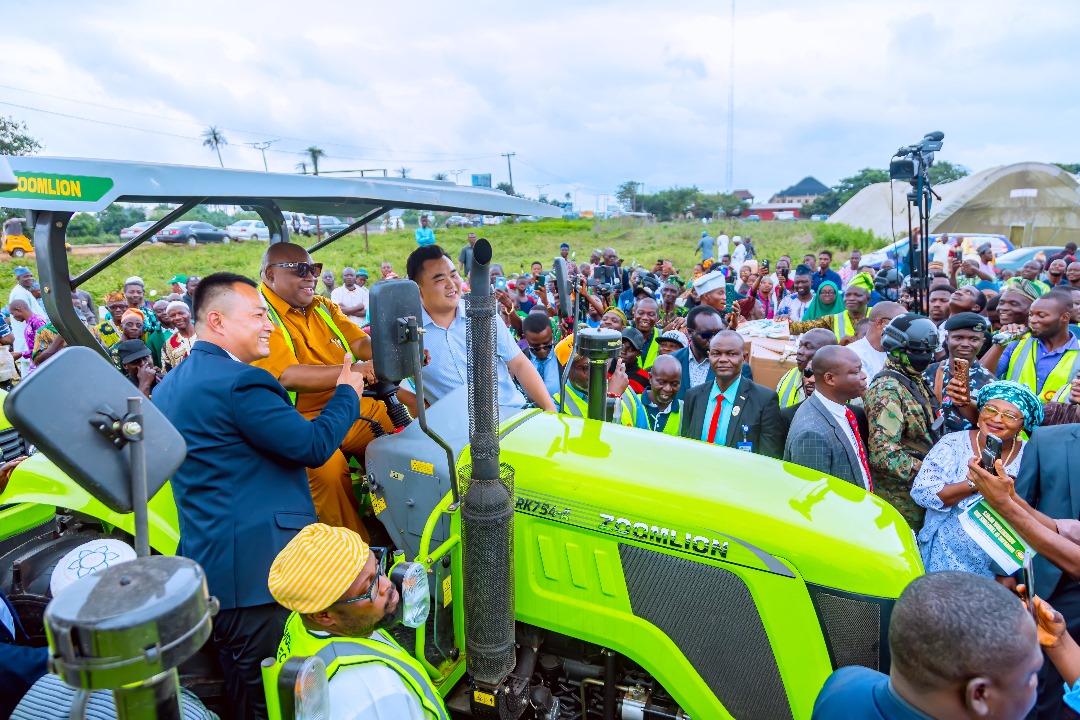
Osun State has, in recent months, increasingly projected itself as an emerging agro-industrial hub, signalling a renewed push to reposition agriculture from subsistence farming to a more productive, commercially viable sector.
From the distribution of tractors and improved farm inputs to renewed emphasis on mechanisation and food production, the government’s interventions suggest an attempt to confront one of the oldest challenges in Osun’s agricultural landscape: low productivity driven by manual, small-scale farming.

Related Posts:
- As Climate Disasters Rise, AgriTech Becomes…
- Harvesting the Sun: Adamawa’s Farmers Embrace Solar…
- FG Opens Agric Mechanisation Programme Application
- Beyond Launch: Can Nigeria’s Soil Health Initiative…
- Why Nigerian Farmers Struggle to Adopt Agritech…
Powered by Contextual Related Posts
On the surface, these initiatives respond to a real and long-standing problem. Agriculture in Osun, as in many parts of Nigeria, has been dominated by smallholder farmers who rely heavily on hoes and cutlasses, with limited access to modern equipment, quality seedlings, fertilisers, and irrigation.
In such a system, output remains low, production costs are high in human labour, and farming struggles to attract young people or generate meaningful income growth. Mechanisation, in theory, offers a way out, reducing labour intensity, expanding cultivated land, and improving yields.
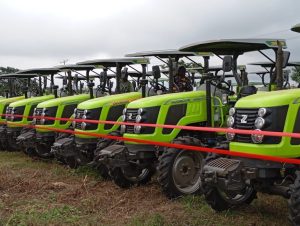
But the critical question is not whether mechanisation is desirable; it is whether the current approach is effective enough to deliver lasting productivity gains for smallholder farmers who form the backbone of Osun’s food system.
When tractors and implements are distributed, who truly gets access to them? Are they reaching farmers cultivating a few hectares in rural communities, or are they concentrated among politically connected cooperatives and large-scale operators? For many smallholders, access is often mediated through rental arrangements that can still be expensive, inconsistent, or poorly managed.
There is also the issue of sustainability beyond the ceremonial handover of equipment. Tractors require regular maintenance, skilled operators, spare parts, and fuel, costs that many farmers cannot easily absorb. Without a well-structured system for maintenance and affordable access, mechanisation risks becoming a short-term productivity boost rather than a transformative shift.
When a tractor breaks down mid-season or fuel prices spike, farmers are often forced back to manual labour, undermining the very gains mechanisation was meant to deliver.
Improved seedlings and inputs face similar challenges. While better planting materials can significantly increase yields, their impact depends on timing, availability, and complementary support such as extension services and climate-appropriate farming practices. Delayed distribution, poor quality inputs, or lack of guidance on optimal use can reduce effectiveness. This raises an important concern: are these interventions embedded within a broader support system, or are they isolated efforts that leave farmers to navigate challenges on their own?
Beyond immediate yields, income growth remains the true test of productivity reform. Higher output does not automatically translate to higher income if farmers lack access to storage, processing facilities, or reliable markets. In Osun, post-harvest losses remain a persistent problem, particularly for perishable crops. Without agro-processing and value-chain development, increased production can even depress farm-gate prices, leaving farmers worse off despite producing more. This is where agro-industrialisation should, in practice, distinguish itself from traditional agricultural support.
Agro-industrialisation implies more than mechanised farming; it points to an integrated system where production links seamlessly to processing, packaging, storage, and markets. The benchmark, therefore, is not simply the number of tractors distributed or hectares cultivated, but whether farmers are earning more, wasting less, and participating in value chains that extend beyond raw produce. Are there functioning processing hubs? Are local agro-industries absorbing farm output? Are farmers being supported to move up the value chain rather than remaining primary producers?
Another important indicator is youth participation. A genuinely transforming agricultural sector should attract young people with opportunities that go beyond manual farm labour.
Mechanisation and agro-industrialisation should create jobs in machine operation, processing, logistics, agribusiness management, and technology-driven farming. If young people continue to see agriculture as exhausting work with low returns, then productivity gains, no matter how well publicised, may not be deep or lasting.
All these questions point to a central concern: is Osun effectively transforming its agrarian base, or merely providing short-term inputs that may not translate into sustained productivity growth? The answer lies not in policy announcements but in measurable outcomes, rising farmer incomes, reduced post-harvest losses, stronger value chains, and a farming system resilient enough to withstand economic and climate pressures.
Osun’s push toward agro-industrialisation is a step in the right direction, but its success will ultimately depend on whether these interventions move beyond visibility and symbolism to deliver structural change.
For farmers on the ground, the promise of agro-industrialisation will only feel real when productivity improvements are durable, incomes are stable, and agriculture becomes a viable pathway out of poverty rather than a struggle for survival.